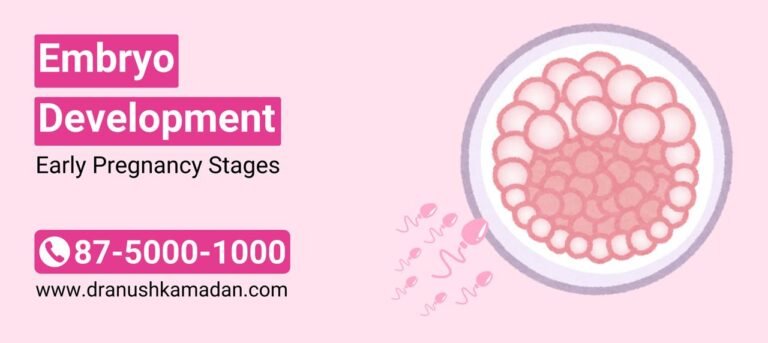
When a sperm fertilizes an egg, a miraculous transformation begins — the creation of new life. This complex biological process, known as embryo development, is the foundation of pregnancy and human growth.
In this guide, Dr. Anushka Madan, IVF specialist, explains the stages of embryo development and how each stage plays a vital role in early pregnancy. Whether you’re trying to conceive naturally or through IVF, understanding embryo development helps you appreciate how conception truly unfolds.
What Is Embryo Development?
Embryo development is the process that begins immediately after fertilization, when the sperm and egg unite to form a zygote — the first single cell of new life.
This zygote undergoes multiple divisions and transformations to become a multicellular embryo, which later implants into the uterus and develops into a fetus.
In simple terms, embryo development is how a single fertilized cell gradually becomes a baby.
The Stages of Embryo Development in Early Pregnancy
Embryo development is a continuous process that occurs in distinct stages. Let’s explore how it unfolds from conception to implantation.
Stage 1: Fertilization (Day 0)
- Fertilization occurs when a sperm cell successfully penetrates an egg cell.
- This fusion forms a zygote containing genetic material from both parents.
- The zygote marks the beginning of human development.
Stage 2: Cleavage (Days 1–3)
- The zygote starts dividing rapidly — first into 2 cells, then 4, 8, and more.
- These cells are called blastomeres.
- At this point, the embryo travels from the fallopian tube toward the uterus.
By Day 3, the embryo typically has 6–10 cells, known as the cleavage stage embryo.
Stage 3: Morula Stage (Days 4–5)
- Around the fourth day, the embryo reaches the morula stage — a compact cluster of about 16–32 cells.
- This stage is essential because cells start differentiating to form specific tissues later on.
Stage 4: Blastocyst Formation (Days 5–6)
- The morula develops into a blastocyst, a fluid-filled structure with two main parts:
- Inner Cell Mass (ICM): Becomes the baby.
- Trophectoderm: Forms the placenta.
- The blastocyst stage is a key milestone — it’s when the embryo becomes ready for implantation into the uterine wall.
In IVF, doctors often perform embryo transfer at this stage to increase pregnancy chances.
Stage 5: Implantation (Days 6–10)
- The blastocyst attaches to the uterine lining (endometrium).
- Once implantation occurs, the embryo begins to receive nutrients and oxygen from the mother’s body.
- This marks the true beginning of pregnancy.
At this point, the hormone hCG (human chorionic gonadotropin) starts being produced — which is what home pregnancy tests detect.
Embryo Development After Implantation
After implantation, the embryo undergoes rapid and intricate changes:
- Week 2–3: Formation of the amniotic sac and placenta.
- Week 4–5: Heart, neural tube (brain and spinal cord), and early organs begin to form.
- Week 6–8: Limbs, eyes, and major organs start developing.
- By Week 8, the embryo becomes a fetus — marking the end of the embryonic period.
Factors Affecting Embryo Development
Several factors can influence how well an embryo develops during early pregnancy:
- Egg and Sperm Quality: Healthier gametes increase the likelihood of normal embryo growth.
- Genetic Health: Chromosomal balance is critical for embryo survival.
- Uterine Environment: A healthy, receptive uterine lining supports implantation.
- Hormonal Balance: Proper estrogen and progesterone levels are vital for sustaining pregnancy.
- Lifestyle Factors: Stress, smoking, poor diet, and lack of sleep can hinder healthy development.
Embryo Development in IVF vs. Natural Conception
While the biological process remains similar, there are a few key differences:
- In natural conception, fertilization happens inside the fallopian tube.
- In IVF, fertilization occurs in a controlled lab environment.
- IVF allows embryologists to observe and grade embryos before transfer, ensuring only the best-quality embryos are selected.
At Dr. Anushka Madan’s fertility clinic, advanced blastocyst culture, ICSI, and embryo monitoring technologies help optimize IVF success rates.
FAQs on Embryo Development and Early Pregnancy
1. When does embryo development start?
It starts immediately after fertilization, when sperm and egg combine to form a zygote.
2. How long does it take for an embryo to implant?
Implantation typically happens 6–10 days after fertilization.
3. What are early signs of embryo implantation?
Mild cramping, light spotting, and slight temperature rise are common implantation indicators.
4. Can an embryo stop developing?
Yes, sometimes due to chromosomal abnormalities, poor egg/sperm quality, or hormonal issues. Medical evaluation helps identify causes.
5. How can I improve embryo development naturally?
Eat a nutrient-rich diet, maintain a healthy weight, avoid toxins, and manage stress effectively.
Conclusion: Every Miracle Begins with a Single Cell
Embryo development is one of nature’s most remarkable processes — turning a single cell into a new human life. Understanding these stages empowers you to make informed choices during fertility treatment or early pregnancy.
Dr. Anushka Madan and her team are dedicated to guiding couples through every stage of conception, offering personalized fertility care, advanced IVF procedures, and compassionate support.
📞 Book Your Consultation
If you’re planning a pregnancy or undergoing IVF, consult Dr. Anushka Madan for expert fertility guidance and evidence-based treatment.
Your journey to parenthood starts with the proper care. Visit Our centre – Get Direction