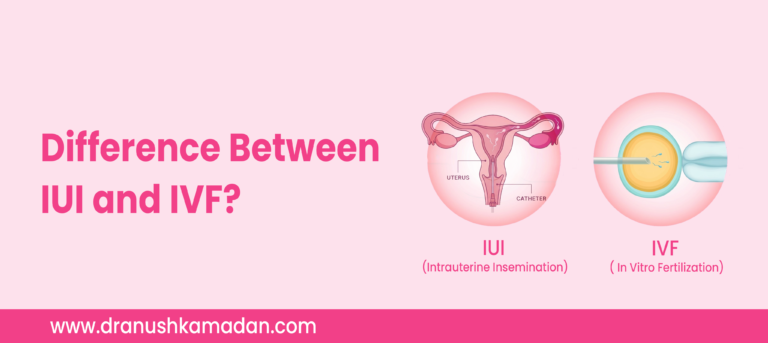
The most important thing a couple can do in planning for fertility procedures would be to have an understanding of both difference between IUI and IVF. Although both procedures are very common in dealing with infertility, they have quite a number of differences in terms of procedure, rate of success, cost, and level of complexity. Among these factors which will influence which procedure is better will include age, underlying cause of infertility, and previous treatment history.
This complete guide below explains all treatment differences Between IUI and IVF treatment, which will make an individual confident in decisions based on medical advice from specialists in reproductive health treatment.
Understanding Infertility Treatment Options
Infertility is a problem for millions of couples across the globe, which can be a result of imbalances in hormones, ovulation dysfunction, tubal blockage, male infertility, unexplained infertilities, or advanced age. Current reproductive medicine technology provides a number of options, with IUI Procedure and IVF Procedure being most widely advised.
With an understanding of IUI VS IVF, patients can make an educated choice concerning a treatment option which suits their requirements in terms of cost, efficacy, and necessity.
What Is IUI (Intrauterine Insemination)?
IUI, which stands for Intrauterine Insemination, is a simple and non-invasive technique used for conceiving a child. The processed and concentrated sperm samples are inserted into a woman’s uterus during this technique, when she is ovulating.
- IUI Treatment: Important Features
- A natural or mildly stimulated cycle
- Sperm placed inside the uterus
- Non-Invasive and Painless Procedure
- Conducted in a Fertility Center/ Clinic
Therefore, IUI is thought of as a front-line treatment in infertile couples with minimal fertility issues.
Who Is IUI Best For?
-
Mild male infertility
-
Unexplained infertility
-
Cervical factor infertility
-
Ovulation disorders like PCOS
-
Couples trying to conceive for a shorter duration
Understanding this stage is important when comparing the difference between treatment IUI and IVF treatment
What Is IVF (In Vitro Fertilization)?
IVF, or In Vitro Fertilization, is an advanced infertility treatment where fertilization occurs outside the body in a laboratory. The resulting embryo is then transferred into the uterus.
Key Features of IVF Treatment
-
Controlled ovarian stimulation
-
Egg retrieval under anesthesia
-
Fertilization in an IVF lab
-
Embryo transfer into the uterus
IVF offers higher success rates and is recommended for complex infertility conditions.
Who Should Consider IVF?
-
Blocked or damaged fallopian tubes
-
Severe male infertility
-
Low AMH or poor ovarian reserve
-
Endometriosis
-
Repeated IUI failure
-
Advanced maternal age
These differences clearly highlight the difference between IUI and IVF in terms of complexity and effectiveness.
IUI and IVF: Comparison
| Criteria | IUI | IVF |
|---|---|---|
| Procedure Type | Simple | Advanced |
| Fertilization | Inside the body | Outside the body |
| Success Rate | 10–20% per cycle | 40–70% (age dependent) |
| Cost | Lower | Higher |
| Medical Intervention | Minimal | Extensive |
| Suitable For | Mild infertility | Severe infertility |
This table summarizes the practical difference between IUI and IVF for easy understanding.
Success Rates: IUI vs IVF
One of the most important aspects in understanding the difference between IUI and IVF is success rate.
-
IUI success rate depends heavily on age, ovulation quality, and sperm health.
-
IVF success rate is significantly higher due to embryo selection and laboratory fertilization.
Women under 35 typically see better results with IVF, while IUI may require multiple attempts.
Cost IUI VS IVF
Cost plays a vital role when evaluating the difference between IUI and IVF.
IUI Cost
-
More affordable
-
Usually requires multiple cycles
IVF Cost
-
Higher upfront cost
-
Fewer cycles due to higher success
Although IVF is costlier, it often becomes more cost-effective after repeated failed IUI cycles.
Risks and Side Effects
Both treatments are generally safe when performed at a certified fertility center.
IUI Risks
-
Mild cramps
-
Minimal risk of infection
-
Slight chance of multiple pregnancy
IVF Risks
-
Ovarian Hyperstimulation Syndrome (OHSS)
-
Emotional and physical stress
-
Procedure-related discomfort
Understanding medical risks further clarifies the difference between IUI and IVF.
Which Is Better: IUI or IVF?
There is no universal answer. The right treatment depends on:
-
Age of the female partner
-
Duration of infertility
-
Underlying fertility diagnosis
-
Previous treatment history
A fertility specialist evaluates these factors before recommending IUI or IVF.
Medical consultation is essential to understand the real-life difference between IUI and IVF for your specific condition.
Final Thoughts: Making the Right Fertility Choice
Hence, awareness of IUI VS IVF can assist the couples in taking a definite and confident step forward into their reproductive life. Although IUI is easy and economical, IVF is more successful in handling complicated cases of infertility.
If you are unsure about the distinction between IUI and IVF, or which treatment you can benefit from, you can discuss this with a professional fertility specialist today.
Avail a personalized consultation at a reliable fertility clinic and thus initiate your journey to parenthood. Dr. Anushka Madan at vrinda fertility is one of the most reliable IVF specialists to go to if you are embarking on a journey of parenthood and want to identify a reliable infertility centre in your locality. Get Direction