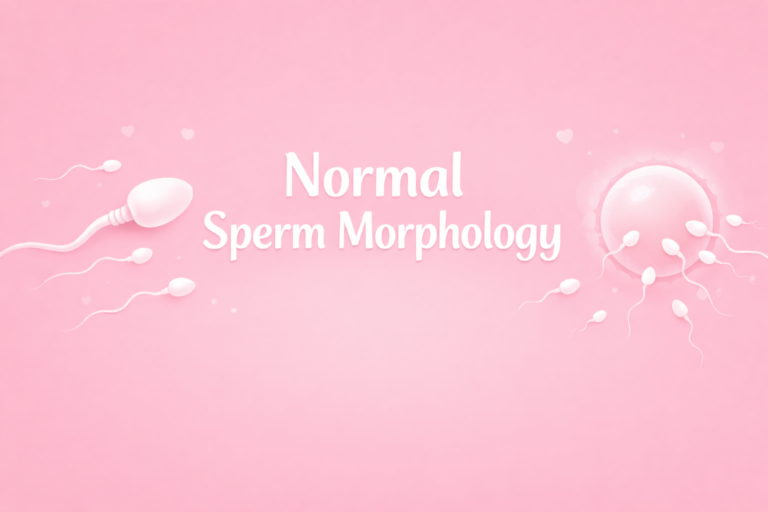
The problem of male fertility is not only a matter of sperm count. In truth, The size and shape of sperm – Normal sperm morphology – is important for natural conception _ plus_ the success of assisted reproduction. Although men who have what is considered a “normal” sperm count can still have fertility problems, as sperm shape affects how well the sperm can swim toward and reach an egg to fertilize it.Learning the range for normal sperm morphology, what causes abnormalities, and how to make your sperm healthier can dramatically improve your probability of becoming pregnant.
This guide explains everything in straightforward, medically accurate language–perfect for couples looking to get pregnant and for people who are examining their own semen analysis results
What Is Normal Sperm Morphology ?
microscope at high magnification during examination of a semen sample.
A typical sperm has three parts:
Head cap – Oval and stores genetic data
Midpiece –Full of mitochondria (When there are lots to me, running toward the egg and inseminating thanks to energy)
Tail –Guided by the sperm tail, which whips like a dolphin’s while swimming towards the egg.”
With abnormal sperm shape, the sperm:
Swim poorly
Fail to penetrate the egg
Carry damaged genetic material
This condition is called teratozoospermia (abnormal sperm morphology).
What Is the Normal Sperm Morphology Range?
According to WHO semen analysis criteria, sperm morphology is assessed using strict (Kruger) criteria.
| Morphology Result | Interpretation |
|---|---|
| 4% or more normal forms | Normal sperm morphology |
| Below 4% normal forms | Abnormal morphology (teratozoospermia) |
Yes — even 4% normal sperm is considered acceptable. This surprises many patients, but most sperm naturally have minor defects.
Why Is 4% Considered Normal?
Strict criteria evaluate sperm very precisely. Only perfectly shaped sperm count as “normal,” which is why the percentage seems low.
How Does Abnormal Sperm Morphology Affect Fertility?
Abnormal sperm shape can impact fertility in several ways:
Reduced ability to swim effectively
Difficulty penetrating the egg membrane
Increased risk of fertilization failure
Higher likelihood of DNA damage
However, pregnancy is still possible — especially if sperm count and motility are good.
In moderate cases, doctors may recommend:
Timed intercourse
IUI (Intrauterine Insemination)
IVF or ICSI in severe cases
Causes of Poor Sperm Morphology
Several medical, environmental, and lifestyle factors can affect sperm shape.
Medical Causes
Varicocele (enlarged testicular veins)
Hormonal imbalance (low testosterone)
Infections of the reproductive tract
Genetic abnormalities
Undescended testes history
Lifestyle Causes
Smoking
Alcohol overuse
Obesity
Chronic stress
Poor diet
Environmental Causes
Heat exposure (laptops on lap, hot baths)
Pesticides and toxins
Radiation exposure
Air pollution
Symptoms of Abnormal Sperm Morphology
Most men have no symptoms. The condition is usually discovered during:
Infertility evaluation
Routine semen analysis
That’s why a fertility assessment is important if pregnancy does not occur after 12 months (or 6 months if the female partner is over 35).
How Is Sperm Morphology Tested?
A semen analysis evaluates:
Sperm count
Motility (movement)
Morphology (shape)
Volume
pH
White blood cells
The sample is examined in a laboratory using strict microscopic criteria.
Doctors may repeat the test after 2–3 months because sperm production takes about 74 days.
Ways to Improve Sperm Morphology Naturally
Sperm health can improve with targeted lifestyle and medical interventions. Since sperm regenerate every 2–3 months, positive changes often show results within one cycle.
1. Eat a Fertility-Boosting Diet
Foods that support sperm structure:
Leafy greens (folate)
Nuts and seeds (zinc, selenium)
Citrus fruits (vitamin C)
Berries (antioxidants)
Fatty fish (omega-3)
Eggs (protein + choline)
Avoid:
Processed foods
Trans fats
Sugary drinks
2. Maintain a Healthy Weight
Obesity alters hormones and increases oxidative stress, which damages sperm structure.
Target: BMI between 18.5–24.9
3. Stop Smoking
Smoking is directly linked to:
Increased abnormal sperm forms
DNA fragmentation
Reduced fertilization rates
Quitting smoking can significantly improve sperm morphology.
4. Limit Alcohol
Heavy alcohol consumption disrupts testosterone production and sperm development. Moderation is key.
5. Reduce Heat Exposure
Testicles need a temperature slightly lower than body temperature.
Avoid:
Hot tubs
Tight underwear
Long laptop use on lap
6. Take Doctor-Recommended Supplements
Certain supplements support sperm development:
Coenzyme Q10
Zinc
Selenium
Vitamin C & E
L-Carnitine
Folic acid
Always consult a fertility specialist before starting supplements.
7. Treat Underlying Medical Issues
Medical treatment may include:
Varicocele surgery
Hormone therapy
Infection treatment
Antioxidant therapy
Professional guidance ensures better results.
8. Manage Stress
Chronic stress increases cortisol, which interferes with reproductive hormones.
Helpful techniques:
Yoga
Meditation
Exercise
Proper sleep (7–8 hours)
When to See a Fertility Specialist
Consult a specialist if:
Semen analysis shows <4% normal morphology
Trying to conceive >1 year
History of varicocele or testicular surgery
Erectile or ejaculation issues
Advanced fertility treatments like IVF with ICSI can overcome morphology issues by injecting a healthy sperm directly into the egg.
Conclusion
although it is one of the most modifiable ones. Even if your semen analysis comes back with wonky shapes, you’ve got room for improvement by changing up your diet and lifestyle or turning to medicine.
Early testing, expert advice and prioritizing healthy habits can also greatly increase the chances of conception — whether through natural or assisted reproductive treatments. If things are taking longer than anticipated, a full fertility work-up can offer some answers and the appropriate treatment plan.
Available personalized consultation at a reliable fertility clinic and thus initiate your journey to parenthood. Dr. Anushka Madan at vrinda fertility is one of the most reliable IVF specialists to go to if you are embarking on a journey of parenthood and want to identify a reliable infertility centre in your locality. Get Direction
FAQs
A sperm morphology of 4% or higher using strict criteria is considered normal.
Yes, in many cases it improves with lifestyle changes, supplements, and medical treatment.
Sperm take about 2–3 months to regenerate, so improvements may appear after one production cycle.
Yes, especially if count and motility are normal. Fertility treatments may help if natural conception is difficult.
Not always. Many causes are reversible with proper care.