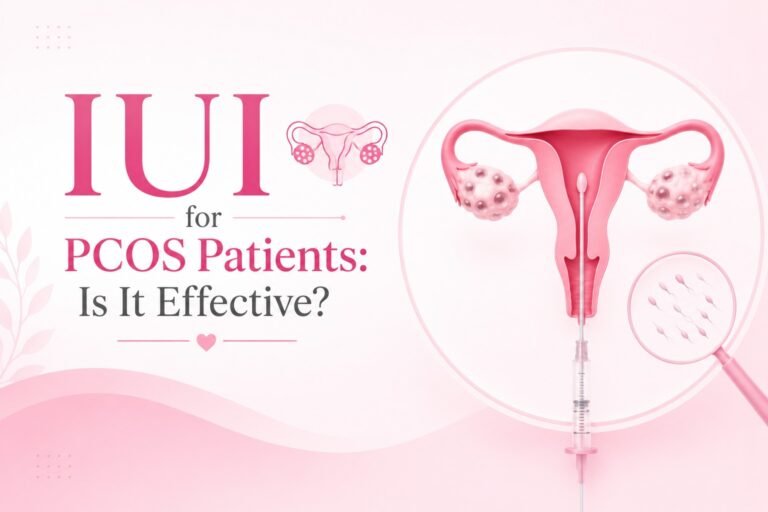
The ailment Polycystic Ovary Syndrome (PCOS) is one of the major causes of female infertility affecting millions of women worldwide. Couples who want to conceive often find it challenging to manage irregular ovulation and achieve natural conception. With advances in science and technology such as IUI, one can be hopeful for a successful pregnancy.
But, many women wonder: Is IUI effective for PCOS patient?
Yes. In many cases, IUI can improve the pregnancy chances of women with PCOS, especially when combined with ovulation-inducing medications (particularly Letrozole) and proper fertility management.
This in-depth guide will tell you everything you need to know about IUI for PCOS patients. From working, success, benefit, risk and preparation and how to improve it.
What is Polycystic Ovary Syndrome?
Polycystic Ovary Syndrome (PCOS) is a condition which causes irregular bleeding and problem in ovulating. PCOS is commonly faced by women.
- Monthly cycle irregularity.
- Hormone imbalance
- High androgen levels.
- Ovarian swelling.
- Increase weight
- Acne and too much hair growth.
- Trouble conceiving.
PCOS affects fertility due to its interference with women’s regular ovulation and causes similar issues. Without Ovulation, Pregnancy Difficult.
IUI Definition
Intrauterine Insemination (IUI) is a procedure that places specially prepared sperm directly inside a woman’s uterus around the time of ovulation. This helps the sperm reach the egg more effectively which increases the chances of fertilization.
IUI is regarded as a less invasive and more affordable fertility treatment than IVF.
How do IUI works for PCOS patients?
IUI is usually used with fertility drugs that boost the ovulation process for PCOS women.
This process generally includes
1. Inducing Ovulation.
Doctors suggest drugs for.
Clomiphene for fertility
Letrozole.
Sex hormones.
Ovarian stimulation and egg maturation by hormonal drugs.
2. Keeping tabs on the follicles
Blood exams and ultrasounds monitor egg growth and hormone levels.
3. Lucrative Shot.
When the follicles grow to an appropriate size, an HCG trigger injection is instituted.
4. Preparing the sperm.
Washing and concentration of sperm sample is done to isolate undamaged sperm.
5. Method of Insemination.
A thin tube feeds the prepared sperm directly into the uterus.
6. Pregnancy Assessment Kit.
A blood test for pregnancy will generally be done about 2 weeks later.
Elements Influencing IUI Success in PCOS
There are many factors that play a role in the effectiveness of IUI.
Age.
Overall pregnancy rates are higher for younger Women.
Weight of Body.
Excess weight can aggravate hormonal imbalance and lessen treatment efficacy.
Quality of ovulation.
The chances of pregnancy will be better in women who respond well to ovulation stimulation medicines.
Semen Quality.
A healthy sperm count and motility can help fertilization.
Insulin Neglect
Managing insulin resistance with drugs and diet can restore ovulation.
Thickness of the Endometrium.
Implantation is supported by healthy lining
Advantages of IUI for PCOS sufferers
There are several advantages of IUI among PCOS infertile patients.
Less Invasive than IVF Treatment
IUI involves a relatively easy procedure that causes little stress.
Costly Alternative.
IUI treatment is significantly cheaper compared to other procedures.
Treatment is quick.
This process is relatively fast compared to other processes.
Chances of becoming pregnant enhanced.
In using IUI, the chances of becoming pregnant are greatly boosted, especially if done alongside ovulation induction.
Less Stressful than Other Options.
Most couples prefer to do IUI before opting for IVF procedures.
CONCLUSION
It is possible to overcome fertility challenges associated with PCOS by undergoing IUI treatment along with other recommended practices such as hormonal management and a proper lifestyle. The success of IUI largely depends on an appropriate fertility specialist and customised approach.
Therefore, if you are facing infertility due to PCOS, seeking advice from a specialist might help you make decisions concerning the future of your fertility process.