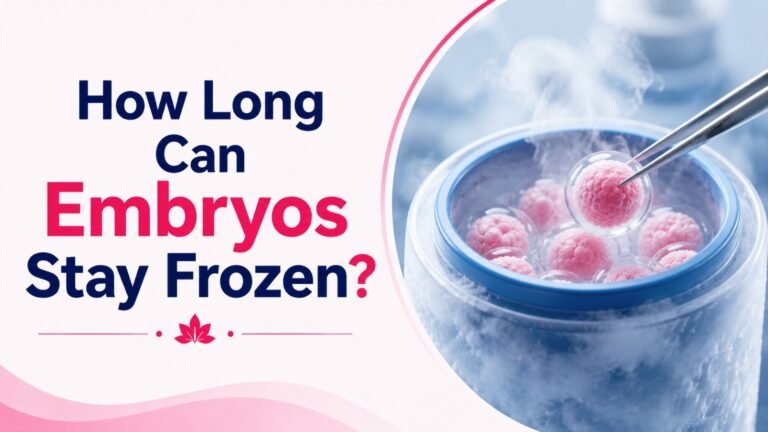
Frozen embryos offer a new and hopeful possibility to many people. Whether considering IVF or postponing a medical procedure, ‘How long can embryos stay frozen?’ is a question many people ask. The good news is frozen embryos can remain frozen for many, many years without losing their viability when executed properly.
Cryopreservation has become a safe and effective method for long-term embryo storage. This guide will explain the answer to a few common questions: How long can embryos stay frozen? Does long-term storage impact the success rate of embryo transfer?
Cryopreservation of Embryos
Cryopreservation of embryos is the term used to describe the process of preserving embryos created during an IVF cycle at ultra-low temperatures for future use. Once the eggs have been fertilized, embryos are monitored for several days. High quality embryos are frozen to be stored long-term or transferred at a later date. Currently, most fertility clinics utilize a method called vitrification for rapid freezing of embryos. This method significantly decreases the chances of harmful ice crystal formation. Embryo survival rates after thawing have significantly improved compared to previously used slow freezing methods. Once cryopreserved, embryos are kept in liquid nitrogen at approximately -196°C (-321°F). At this temperature, all activity stops, and embryos can remain frozen for long periods of time.How Long Can Embryos Stay Frozen?
There is no current limit to how long embryos can stay frozen as long as they are kept in adequate cryogenic storage. Unlike other living tissues, frozen embryos do not continue to age in storage. Their cellular functions remain ceased until they are thawed. It is well documented that pregnancies have occurred after embryos that were frozen for: – 5 years – 10 years – 15 years – 20 years – 25 years There are documented births after embryos were frozen for over **30 years**. Frozen embryos can remain storage for long periods of time and still remain viable. The most important factor to embryo storage is the maintenance of uninterrupted freezing throughout the duration of the storage period.Does Storage Time Affect Embryo Quality?
Many patients have concerns that after a long period of storage, embryos will “expire.” The good news is that current studies show that after long periods of storage, embryo quality is not significantly decreased by storage duration. Embryos remain metabolically inactive and frozen, therefore, will not age. Prior to the freezing process, factors that more significantly impact embryo quality are: – The age of the mother at the time the eggs were retrieved – Egg Quality – Sperm Quality – Embryo Development – Embryo Grading – Laboratory Conditions – Cryopreservation Technique A high-quality embryo frozen now will have the same chance of surviving after thawing years later as it would if thawed after a few months of storage.What Research Says About Long-Term Frozen Embryos
A number of large-scale fertility studies have analyzed pregnancy outcomes when different thawing time frames of frozen embryos have been utilized. In general, researchers have observed the following: – embryo thawing survival rates were the same – implantation rates were the same – pregnancy rates were the same – no significant increase in birth defects were observed – babies born after multiple decades of embryo storage were healthy Some studies have reported minor differences in success rates, but in general, it is believed differences in success rates were observed as a result of patient age, embryo quality, or infertility and not due to length of time of embryo freezing. Because of the evidence being reported, long-term storage of frozen embryos is believed to be safe and is clinically effective.What Happens During Frozen Embryo Storage?
Once embryos have been frozen, liquid nitrogen is used to freeze embryos in a cryogenic storage tank and embryos are carefully placed in labelled storage containers. Some of the quality control procedures that fertility clinics implement are: – Temperature is continuously monitored. – The tanks are routinely inspected. – Liquid nitrogen is refilled routinely. – Identifying embryos is secured. These quality control procedures and storage systems are implemented to ensure that stored embryos are preserved. Patients are required to sign a consent form at least once a year giving their permission to continue storage of their frozen embryos. When individuals are ready to experience pregnancy, embryos have an intricate thawing procedure done to them. Vitrification techniques have reached a point where a majority of embryos can survive the thawing procedure. Once thawed, an embryologist can check the thawing for: – Survival of the cells – Expansion of the embryo – Progression – Quality Embryos that pass that thaw check are sent into a FET cycle. The embryologists of today have thawing success rates of 90-95%. Frozen Shrink Wraps and Pregnancy Millions of babies were born around the world using frozen embryos. Births that are achieved using embryo transfer demonstrate that frozen embryos have a high success rate, if not equal to that of the fresh transfer. Transfers of frozen embryos are thought to have notable benefits, which include the following: – Better preparation of the uterus – Lower impact of the ovarian stimulation – Better implantation of embryos – Better timing of the treatment Frozen embryos have not shown an increase of birth defects, or developmental issues, in babies born. The frozen embryos help with the timing of pregnancy. The delay can help those whose fertility has been threaten by a medical intervention. Financial, personal, or professional factors may lead to the postponement of pregnancy while retaining the ability to conceive in the future.Medical Reasons
In the context of fertility treatments, some specialists advocate for the freezing of all embryos if the patient’s hormone levels or uterine conditions are suboptimal during the IVF cycle.Is there a legal limit to how long embryos can be frozen?
From a medical perspective, frozen embryos can remain preserved for many years. From a legal perspective, how long embryos can be frozen will depend on the country and its specific laws. Some countries will have storage limitations, while others may provide a legal basis for extension requests. For fertility clinics, the following is often required: – A fee for each year of storage – Updates to consent forms – Updates to personal contact information – Decisions about how long the embryos will continue to be stored If long-term embryo storage is being considered, legal and fertility clinic policies should be reviewed.What Factors Impact the Success Rate of Frozen Embryos?
The duration of embryo storage will have little impact on how successful the implanted embryo will be. Other factors will have a greater impact.Maternal age at the time of Egg Retrieval
Maternal age will be a key determiner of the quality of the embryos formed. Younger females will produce eggs that are healthier and have a higher potential for implantation.Embryo Quality
Embryos that are of excellent grade in the laboratory will often have pregnancy outcomes that are successful.Experience in the Laboratory
The freezing and thawing of embryos will be successful when the laboratory procedures are of high quality and embryologists are skilled.Uterine Health
Embryos will be successfully implanted when the uterus is in a healthy state.Overall Health
Weight management, cessation of smoking, and a healthy lifestyle will all be beneficial to the success of pregnancy.What is the Cost of Long-Term Storage of Embryos?
Storage costs depend on a country’s fertility clinic. Patients generally pay the following: kick-off freezing costs, yearly storage fees, and renewal administrative fees. Some clinics offer multi-year storage plans, and others offer yearly plans. It is important to recognize the financial impact of embryo storage.Final Thoughts
If you are wondering, “how long can embryos stay frozen?”, the answer is many years. Due to the advancements in embryo vitrification, cryogenic storage, and the freezing process, embryos can remain frozen for decades without the loss of the embryo’s viability. Instead, success of the treatments depends much more on things like maternal age at egg retrieval, quality of the embryos, and the fertility clinic’s quality. If you’re thinking about freezing embryos, a good fertility specialist can help you by giving you an idea on your situation, your options, storage policies, success rates, and your family plans. Thanks to the advancements of reproductive medicine, frozen embryos have long effective reproductive flexibility and help families achieve successful pregnancies. Visit our centreFAQs
1. Can embryos stay frozen forever?
Current scientific understanding suggests embryos can remain frozen indefinitely if cryogenic conditions remain stable. There is no proven biological expiration date.
2. Do frozen embryos age?
No. Frozen embryos do not continue ageing while stored because biological activity essentially stops at cryogenic temperatures.
3. Are embryos damaged by freezing?
Modern vitrification has dramatically reduced freezing-related damage. Most embryos survive thawing successfully.
4. Can embryos frozen for 20 years still result in pregnancy?
Yes. Numerous healthy pregnancies have resulted from embryos stored for two decades or longer.