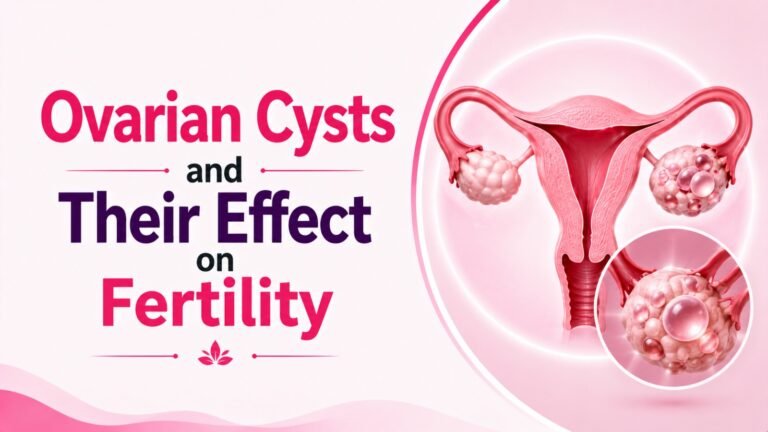
Ovarian cysts are among the most widespread reproductive health issues for women of childbearing age. The phrase ovarian cysts can cause panic in women, particularly in those who are planning for or are in the early stages of pregnancy. A common question women have is whether or not ovarian cysts cause complications in getting pregnant or whether they cause issues with pregnancy. The preferred answer is that the majority of ovarian cysts have no effect on pregnancy. Most cysts are harmless, and many women may not even know that they ever had one as many ovarian cysts resolve on their own.
Having the knowledge of the Ovarian Cysts and Their Effect on Fertility, their symptoms, and how they may impact fertility can help women to address their concerns and improve their reproductive health.
The answer is a bit different for some other cysts. Some can indeed damage ovarian tissue and also can be a sign an underlying condition that may impact reproductive health, like endometriosis or polycystic ovary syndrome (PCOS). Some of these underlying conditions may also impact reproductive health.
Cysts may also have symptoms that impact fertility in certain instances.
What Are Ovarian Cysts?
Ovarian cysts are fluid-filled sacs that form on and/or around the ovaries. The ovaries produce and store eggs and produce hormones.
Most ovarian cysts are functional cysts. These cysts naturally occur during the menstrual cycle. Functional cysts are not harmful or painful and are even likely to resolve on their own with no medical intervention in a few weeks to a few menstrual cycles.
Large, painful, and persistent cysts may even need to be surgically removed, though many ovarian cysts may not be harmful.
Types of Ovarian Cysts
It is important to know that cysts can also be classified by type. The type of cyst can also impact fertility in different ways.
1. Functional Cysts
The two most frequent functional cysts are:
– Follicular cysts
– Corpus luteum cysts
Cysts as part of a normal menstrual cycle rarely affect fertility and will most often resolve on their own without treatment.
2. Endometriomas
“Chocolate cysts” are actually endometriomas. Endometriomas form from endometriosis, which is when tissue similar to the lining of the uterus grows elsewhere in the body.
Endometriomas can:
– Damage Ovarian tissue
– Reduce ovarian reserve
– Affect the quality of Oocytes
– Make pregnancy more difficult
Endometriosis is often associated with pelvic pain and infertility.
3. Polycystic Ovaries (PCOS)
PCOS also results in the formation of multiple small follicles that do not reach full maturity, but PCOS does not affect the ovaries in the same manner as cysts do.
PCOS is a leading cause of infertility in women. PCOS can:
– Cause a Hormonal imbalance
– Lead to irregular menstrual cycles
Fortunately, many women with PCOS have successful pregnancies.
4. Dermoid Cysts
These cysts can tissue like hair, skin, or fat. They are usually benign and rarely affect fertility. Large dermoid cysts may require removal.
5. Cystadenomas
Cystadenomas are benign, large, fluid filled, surface growths on the ovaries that may affect fertility, require removal, and cause pelvic discomfort.
Common Symptoms of Ovarian Cysts
Most ovarian cysts do not have symptoms. Ovarian cysts are often found during a pelvic exam or ultrasound.
Possible symptoms include:
- Pelvic pain
- Lower abdominal pain
- Pain during sex
- Bloating
- Increased need to urinate
- Menstrual irregularities
- Painful periods
- Increased sense of fullness in the abdomen
If there is also sudden severe pelvic pain, fever, nausea, dizziness, or fainting, seek emergency medical help. This may mean a cyst has ruptured or there is ovarian torsion.
Ovarian Cysts and Their Effect on Fertility?
It depends on the cyst type.
Most functional ovarian cysts do not impact fertility and women continue to ovulate. These cysts often resolve on their own.
However, some cysts can impact fertility by:
– Stopping ovulation
– Damaging the ovaries
– Blocking the release of eggs
– Impacting hormones
– Decreasing the number of eggs in the ovaries
The reason the cyst formed is usually more important than the cyst itself.
How endometriosis affects fertility
Of all the ovarian cysts, endometriosis-related cysts may cause the most infertility problems.
They can:
– Cause inflammation
– Damage eggs
– Decrease the number of eggs in the ovaries
– Cause pelvic scarring
– Change your reproductive organs
Women with moderate to severe endometriosis usually need a fertility evaluation if they do not get pregnant after trying to conceive regularly.
PCOS and fertility
Polycystic ovary syndrome (PCOS) affects millions of women and is one of the most common causes of ovulation-related infertility.
Here are the symptoms for women suffering from PCOS:
– Irregular menstrual cycle
– Anovulation
– Difficulty managing weight
– Acne outbreaks
– Hirsutism
– Insulin resistance
The good news is lifestyle changes, medications, and fertility procedures can typically restore ovulation.
Can Cysts on Ovaries Stop you from Getting Pregnant?
Most cases of ovarian cysts should not have an impact on getting pregnant.
Women who have simple functional ovarian cysts can often conceive without issue.
Cysts on the ovaries combined with:
– Endometriosis
– PCOS
– Large surgeries on the ovaries
– Significant damage to the ovaries
– Altered hormone levels
can make it more difficult to get pregnant.
Finding and treating these conditions early can greatly help improve fertility.
How do you Know if you have Ovarian Cysts?
Finding ovarian cysts can be done in a variety of ways.
Pelvic Exam
Sometimes large ovaries and cysts can be found during routine pelvic exams.
Ultrasound
The most helpful imaging test is an ultrasound, and it can tell your doctor:
– The size
– Where it is located
– The shape
– The internal structure
– The type of cyst
Blood Work
Blood work can test:
– Levels of certain hormones
– A pregnancy test
– A tumour marker (CA-125)
Cysts that are Large or Complex
These may require an MRI or CT.
What are your Options for Treatment?
This is dependent on:
– Your age
– Your symptoms
– The Size of the cyst
– The Type of cyst
– Your fertility goals
Watchful Waiting
If the cyst is small and functional, it is often just recommended that your doctor monitors the cyst.
Other Options
Future functional cysts can be prevented with birth control to help regulate hormones, but the cysts that do form still remain. Pain relief is also an option.
Treatment for women trying to conceive becomes specialized as opposed to the standard prescription for contraceptive therapy.
Surgical Treatment
Surgery may be an option for a cyst that:
– Is large
– Persists for several months
– Seems suspicious
– Causes significant pain
– Twists the ovary
– Breaks open
Surgeons try to complete a laparoscopic cystectomy to remove the cyst and to keep the ovary intact.
Keeping ovarian reserves is important to women who want to have children in the future.
Fertility Treatment After Ovarian Cysts
If ovarian cysts become the reason for infertility, there are many fertility treatment options.
These may include:
– Taking medications to induce ovulation
– Hormonal therapy
– Intrauterine insemination (IUI)
– In vitro fertilization (IVF)
These options depend on:
– the woman’s age
– the woman’s ovarian reserve
– the cause for the infertility
– the length of the infertility
– the fertility of the woman’s partner
Women who have had fertility treatment have become pregnant post-surgery.
Lifestyle Tips for Healthy Ovaries
While not all cysts are preventable, there are ways to enhance reproductive health which may decrease the risk for ovarian cysts.
These may include:
– Healthy body weight
– a Balanced nutritious diet
– Regular exercise
– Stress management
– Gynaecological appointments
– Medication for menstrual regulation
– Control blood sugar for PCOS
– No Smoking
These choices also impact fertility positively.
When Is It Necessary to Visit a Doctor?
You should see a doctor if you have:
– Persistent pelvic pain
– Irregular menstrual cycles
– Trouble conceiving after 1 year (or after 6 months if over 35)
– Rapid swelling of the abdomen
– Pain during intercourse
– Multiple ovarian cysts
– Heavy menstrual bleeding
The preservation of fertility is better when treatment is started sooner.
Are Pregnancies with Ovarian Cysts Normal?
Yes. Many women who have ovarian cysts have perfectly normal pregnancies.
Small functional cysts usually resolve on their own during pregnancy.
In the pregnancies where cysts are monitored, it is a small percentage that need to be removed. In these cases, obstetricians will monitor the cysts along with the health of the mother and baby.
Though women with PCOS and endometriosis may have other fertility issues that require aid, they can have a successful pregnancy using other reproductive options available.
Overall Statement
It is very common to have ovarian cysts and they do not usually limit pregnancies. In general, functional cysts go away on their own and usually do not affect a woman’s fertility. However, cysts that are caused by endometriosis or PCOS may affect fertility due to ovulation and egg quality.
The best way to preserve fertility is with timely treatments and regular visits to a gynaecologist. If a woman has pelvic pain, irregular menstrual cycles, or has difficulty conceiving, they should seek help from a physician.
Thanks to advancements in diagnostic techniques, fertility medications, assisted reproductive technologies, and minimally invasive surgery, achieving pregnancy is possible for many women with ovarian cysts. With sufficient medical care and the right treatment, preserving a woman’s fertility while managing ovarian cysts is achievable.