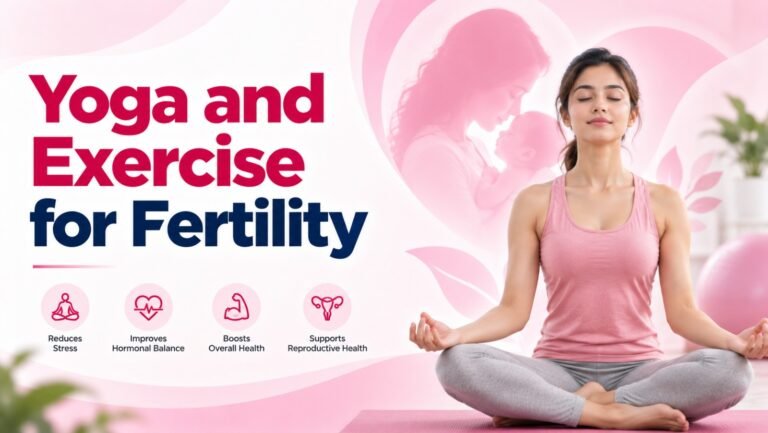
When trying to conceive, lifestyle habits can play an important supporting role. Alongside nutrition, sleep, medical care, and stress management, regular physical activity can help support overall reproductive health. Yoga and exercise for fertility are often discussed because they may improve physical fitness, circulation, metabolic health, and emotional well-being.
However, exercise is not a fertility treatment by itself. The right amount and intensity depend on factors such as age, menstrual health, body weight, existing medical conditions, pregnancy history, and whether someone is undergoing fertility treatment.
The goal is generally not to exercise as hard as possible. Instead, a balanced routine that supports cardiovascular health, strength, mobility, and stress management may be more appropriate.
Can Exercise Help Fertility?
Regular physical activity can contribute to several aspects of health that are relevant to reproductive function.
Potential benefits include:
- Supporting a healthy body weight
- Improving cardiovascular fitness
- Supporting insulin sensitivity and metabolic health
- Maintaining muscle strength and bone health
- Reducing stress and promoting relaxation
- Supporting better sleep
- Improving overall physical and emotional well-being
For people with certain metabolic conditions or weight-related reproductive problems, becoming more physically active may be particularly useful as part of a broader health plan.
At the same time, too much exercise can sometimes work against reproductive health. Very high training loads combined with inadequate calorie intake can disrupt menstrual cycles and ovulation in some women.
This makes balance particularly important when exercising while trying to conceive.
What Types of Exercise Are Generally Helpful?
There is no single exercise routine that guarantees improved fertility. A varied, sustainable program is usually more practical than focusing on one specific activity.
1. Walking
Walking is one of the simplest ways to stay active while trying to conceive.
A brisk walk can provide moderate cardiovascular exercise without placing excessive stress on the body. It can also be easy to adjust according to fitness level.
Consider:
- Brisk walking outdoors
- Walking on a treadmill
- Taking short walks throughout the day
- Walking after meals when appropriate
For someone who is currently inactive, gradually increasing walking may be more realistic than immediately starting an intense workout program.
2. Moderate Cardiovascular Exercise
Activities such as cycling, swimming, dancing, or moderate aerobic workouts can improve cardiovascular fitness.
The key is choosing an intensity that can be maintained consistently without excessive fatigue.
A person who already exercises regularly may not need to stop simply because they are trying to conceive. However, very demanding endurance training or sudden increases in exercise volume may require reconsideration, particularly if periods become irregular.
3. Strength Training
Resistance exercise can help maintain muscle mass, strength, bone health, and metabolic health.
Options include:
- Bodyweight exercises
- Resistance bands
- Light-to-moderate weights
- Functional strength exercises
- Supervised gym workouts
Good technique and appropriate progression matter more than lifting extremely heavy weights.
People undergoing fertility treatment should ask their fertility specialist whether specific exercises need to be modified, particularly during ovarian stimulation.
4. Yoga
Yoga combines movement, flexibility, breathing, and relaxation. It may be especially appealing to people who experience stress while trying to conceive.
Yoga may help with:
- Flexibility and mobility
- Gentle physical conditioning
- Relaxation
- Mindfulness
- Stress management
- Body awareness
However, claims that particular yoga poses can “increase fertility” or directly improve egg quality should be treated cautiously. There is not strong evidence that a particular pose can cause conception.
Which Yoga Styles May Be Appropriate?
Gentle and moderate forms of yoga can be suitable for many people.
Depending on experience and medical circumstances, options may include:
Hatha Yoga
Hatha classes often use slower movements, controlled breathing, and sustained poses. This can make them suitable for people looking for a calmer form of physical activity.
Restorative Yoga
Restorative yoga emphasizes supported, comfortable positions and relaxation. It may be useful as part of a broader stress-management routine.
Gentle Vinyasa
A slower vinyasa practice can provide movement and mobility without necessarily becoming a high-intensity workout.
Prenatal Yoga
Once pregnancy has been confirmed, a prenatal yoga program may be more appropriate than a general class. Certain poses and movements may need to be modified as pregnancy progresses.
Yoga Poses for Fertility: What Does the Evidence Say?
You may encounter lists of “fertility-boosting yoga poses” online, including poses such as:
- Bound Angle Pose
- Child’s Pose
- Cat-Cow
- Legs-Up-the-Wall
- Supported Bridge
- Reclined Butterfly
These poses may promote relaxation, gentle mobility, or comfort. But there is an important distinction between supporting well-being and directly increasing fertility.
There is currently no established yoga pose that has been proven to make someone fertile or guarantee conception.
Yoga can therefore be viewed as a complementary wellness practice rather than a substitute for fertility evaluation or treatment.
How Much Exercise Is Appropriate?
The appropriate amount varies considerably from person to person.
For many adults, public-health recommendations include regular moderate-to-vigorous physical activity along with muscle-strengthening activity. But people trying to conceive may need individualized advice when exercise is intense, menstrual cycles are irregular, or fertility treatment is involved.
A useful principle is:
Exercise should support your health rather than leave your body chronically exhausted or under-fueled.
Signs that your training may need adjustment include:
- Missed or irregular periods
- Persistent fatigue
- Recurrent injuries
- Significant unexplained weight loss
- Poor recovery between workouts
- Reduced performance despite continued training
- Feeling constantly exhausted or unwell
If these occur, discuss them with a healthcare professional.
Can Exercise Affect Ovulation?
Yes, exercise can affect reproductive function, particularly when physical activity is very intense and accompanied by insufficient energy intake.
The body requires adequate energy for normal physiological functions. In some athletes and highly active individuals, low energy availability can interfere with the hormonal signals involved in reproduction.
This can contribute to menstrual disturbances and reduced ovulation.
That does not mean exercise should be avoided when trying to conceive. Rather, it highlights the importance of balancing training, nutrition, recovery, and reproductive health.
Exercise and Fertility in People With PCOS
Polycystic ovary syndrome (PCOS) is a common condition associated with irregular ovulation and other metabolic features.
Physical activity can be an important component of PCOS management. Exercise may support cardiovascular fitness and insulin sensitivity, while lifestyle changes may contribute to improved metabolic health.
For someone with PCOS who is trying to conceive, exercise can therefore be part of an overall fertility strategy—but it should be combined with appropriate medical assessment when ovulation is irregular or conception is taking longer than expected.
Exercise, Weight, and Fertility
Both underweight and overweight status can be associated with reproductive challenges in some people.
For individuals whose weight is affecting ovulation or metabolic health, gradual lifestyle changes may be recommended by a healthcare professional.
However, fertility should not be reduced to a number on the scale.
Rapid dieting, severe calorie restriction, or excessive exercise can create additional problems, including menstrual disruption.
A sustainable approach typically focuses on:
- Nutritious food
- Adequate energy intake
- Regular physical activity
- Strength and cardiovascular fitness
- Good sleep
- Sustainable habits
What About Exercise During Fertility Treatment?
Exercise recommendations can change during assisted reproductive treatment.
For example, ovarian stimulation can cause the ovaries to enlarge. Depending on the treatment stage and individual circumstances, healthcare professionals may recommend modifying activities that involve substantial impact, twisting, or abdominal strain.
People undergoing IVF or other fertility procedures should follow the specific activity recommendations provided by their fertility clinic.
This is particularly important after procedures such as egg retrieval.
What Exercise Should You Avoid While Trying to Conceive?
There is no universal list of exercises that every person must avoid.
Instead, caution may be appropriate with activities that:
- Cause significant pain
- Create repeated high-impact stress when your body is not accustomed to it
- Involve extreme exertion
- Contribute to menstrual irregularity
- Increase injury risk
- Are performed without adequate recovery or nutrition
During fertility treatment or early pregnancy, restrictions may be more specific.
If your doctor or fertility specialist has given you activity restrictions, those recommendations should take priority over general fitness advice.
Does Yoga Reduce Stress During Fertility Treatment?
Trying to conceive can be emotionally demanding, particularly when conception takes longer than expected or treatment is required.
Yoga incorporates breathing, mindful movement, and relaxation, which may help some people manage stress and improve their sense of well-being.
However, it is important not to interpret stress reduction as proof that yoga directly increases pregnancy rates.
Fertility is influenced by many factors, including ovulation, sperm health, fallopian tube function, age, reproductive anatomy, and medical conditions.
A Simple Fertility-Friendly Exercise Routine
For someone without medical restrictions, a balanced weekly routine could include:
Monday: 30-minute brisk walk + gentle stretching
Tuesday: Moderate strength training
Wednesday: Gentle yoga or mobility work
Thursday: 30-minute walk or moderate cardio
Friday: Strength training
Saturday: Longer relaxed walk, swimming, or another enjoyable activity
Sunday: Rest or restorative yoga
This is only an example—not a prescription.
Someone who currently does little exercise can start with shorter sessions and gradually build up. Conversely, someone accustomed to intensive training may need to focus more on recovery and adequate nutrition.
Tips for Exercising While Trying to Conceive
Listen to your body
Fatigue, pain, dizziness, and persistent exhaustion should not be ignored.
Stay adequately nourished
Exercise increases energy requirements. Restrictive eating combined with heavy training can affect menstrual function.
Prioritize recovery
Rest days, sufficient sleep, hydration, and appropriate nutrition are part of a healthy exercise program.
Choose activities you enjoy
Consistency is easier when exercise is enjoyable rather than something you feel pressured to do.
Avoid fertility-related fitness myths
No exercise, yoga pose, supplement, or “fertility workout” can guarantee conception.
Seek individualized advice when needed
Medical guidance is particularly important if periods are irregular, there is a known reproductive condition, or fertility treatment is underway.
When Should You Seek a Fertility Evaluation?
Exercise can support general health, but it should not delay appropriate medical evaluation.
Consider speaking with a healthcare professional if you have concerns about ovulation, menstrual irregularity, reproductive health, or difficulty conceiving.
A fertility evaluation may assess both partners when appropriate because fertility problems can involve female factors, male factors, both, or remain unexplained.
Final Thoughts
Yoga and exercise for fertility are best viewed as components of a healthy lifestyle rather than standalone fertility treatments. Moderate physical activity can support cardiovascular fitness, metabolic health, strength, mobility, sleep, and emotional well-being.
The most useful approach is usually one that is consistent, adequately fueled, appropriately challenging, and tailored to your circumstances.
If you are experiencing irregular periods, have a known reproductive condition, or are undergoing fertility treatment, discuss your exercise routine with your doctor or fertility specialist. The right plan should support both your overall health and your reproductive goals.
Visit Vrinda Fertility
Take the next step toward your parenthood journey with expert fertility care, advanced treatments, and personalized treatment plans.
Visit Vrinda Fertility today and consult experienced fertility specialists to understand your fertility needs and explore the right treatment options for you.