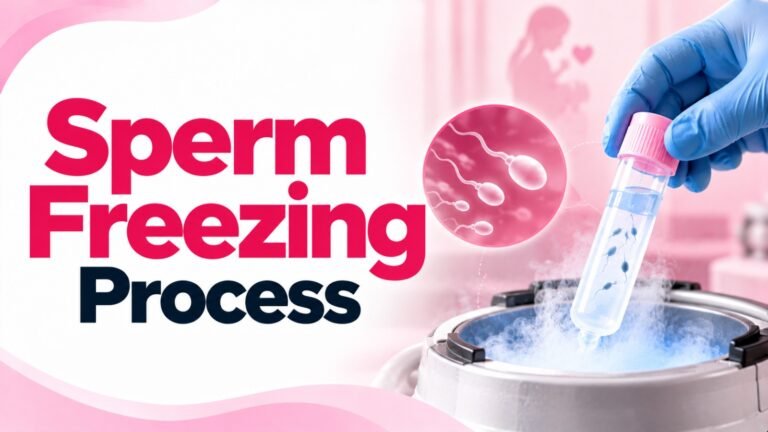
Sperm Freezing Process
Planning for future fertility is becoming increasingly important for men who may face medical treatment, fertility concerns, or simply want to preserve the option of having biological children later in life. Sperm freezing process is one of the established methods of male fertility preservation. It involves collecting a semen sample, evaluating the sperm, treating the sample with a cryoprotective solution, freezing it under controlled laboratory conditions, and storing it at very low temperatures for potential future use.
For many men, sperm freezing process can provide an opportunity to preserve sperm before treatments or situations that could affect future fertility. It may be considered before chemotherapy or radiation, certain surgeries, vasectomy, or in situations where producing sperm later could become difficult. The decision is personal, so discussing individual circumstances with a fertility specialist is important.
The good news is that sperm freezing process is not usually a complicated procedure for the person providing the sample. Most of the work happens in the fertility laboratory, where trained professionals assess, prepare, freeze, identify, and safely store the specimen.
This guide explains the sperm freezing process step by step, including semen collection, semen analysis, cryopreservation, storage, thawing, possible uses, safety considerations, and factors that can affect the overall cost.
What Is the Sperm Freezing Process?
The sperm freezing process, also called sperm cryopreservation, is a fertility-preservation technique in which sperm-containing semen is collected and stored at extremely low temperatures. The purpose is to preserve sperm for possible use in fertility treatment at a later date.
During the sperm freezing process, a semen sample is first collected in a clinic or through an approved home-collection arrangement, depending on the clinic’s protocol. The laboratory then evaluates the sample, including parameters such as sperm concentration, movement and morphology. A portion may also be assessed after freezing and thawing to determine how well the sperm tolerate cryopreservation.
The laboratory adds a cryoprotective medium to help protect sperm cells from damage associated with freezing. The prepared specimen is divided into suitable storage containers, such as straws or vials, and then cooled and transferred into liquid nitrogen or liquid-nitrogen vapor storage.
One important point about the sperm freezing process is that not every sperm cell necessarily survives freezing and thawing. The survival rate can vary according to the original semen quality and laboratory factors. Therefore, the fertility team may recommend banking more than one sample when appropriate.
Why Do Men Consider Freezing Sperm?
There is no single reason why someone may consider the sperm freezing process. Fertility preservation is often discussed when there is a possibility that sperm production or sperm quality could be affected in the future.
One of the most important situations is cancer treatment. Chemotherapy, radiation and some cancer-related surgeries can potentially affect sperm production. Because of this, fertility specialists may discuss sperm banking before treatment begins whenever clinically possible.
Men may also consider the sperm freezing process before a vasectomy if they want to retain the option of using their sperm in the future. Others may consider it when sperm quality is declining, when there is a risk of reproductive injury, or when future circumstances could make sperm collection difficult.
Fertility preservation may also be discussed by people undergoing gender-affirming medical care that could affect future sperm production. The appropriate timing depends on the person’s treatment plan and should be discussed with a qualified healthcare professional.
Importantly, sperm freezing process does not guarantee a future pregnancy. Instead, it preserves sperm that may provide an option for future fertility treatment. The eventual chance of pregnancy depends on several factors, including sperm quality, the fertility of the person providing the eggs, the treatment used and other clinical circumstances.
Step-by-Step Sperm Freezing Process
Understanding each stage can make the sperm freezing process feel much less unfamiliar. Although individual clinic protocols can differ, the general pathway includes consultation, sample collection, testing, preparation, freezing and long-term storage.
1. Initial Fertility Consultation
The sperm freezing process generally begins with a consultation. The fertility specialist may ask about medical history, previous surgeries, medications, fertility concerns and the reason for preserving sperm.
If sperm freezing is being considered before cancer treatment, timing can be particularly important. The fertility team may coordinate sperm collection with the patient’s broader medical treatment schedule.
During the consultation, ask the clinic how many samples are recommended, what abstinence period they advise, what tests are required, how storage is managed and what happens when the samples are eventually needed.
A good sperm freezing process should also involve clear consent and documentation. Cryostorage laboratories need reliable identification and documentation systems so that specimens can be correctly tracked throughout storage and future use. ASRM laboratory guidance emphasizes appropriate labeling, documentation and storage monitoring for cryopreserved semen.
2. Preparing for Semen Collection
Preparation is an important part of the sperm freezing process because the quality and quantity of a semen sample can vary.
Your clinic will tell you how long to avoid ejaculation before providing the sample. notes that collection after at least 48 hours without ejaculation is commonly recommended, although the appropriate interval can depend on the clinical situation and laboratory protocol.
The sample is normally collected by masturbation into a sterile container supplied by the fertility clinic. Regular condoms should not be used because some contain lubricants or spermicides that can harm sperm.
If you are uncomfortable collecting the sample at a clinic, ask whether an approved home-collection option is available. The clinic will provide instructions about transportation and timing.
3. Semen Collection
During the sperm freezing process, semen collection is generally straightforward. A private room is provided at the fertility center, and the sample is collected into a laboratory-approved container.
If collecting at home is permitted, the sample usually needs to reach the laboratory within the timeframe specified by the clinic. It may also need to be kept close to body temperature during transport.
If ejaculation is difficult because of anxiety, a medical condition, medication, previous surgery or another reason, do not assume that sperm preservation is impossible. Fertility specialists may have alternative methods for obtaining sperm in selected cases, including medically assisted sperm-retrieval techniques.
4. Semen Analysis
A semen analysis is a key stage of the sperm freezing process. The laboratory evaluates characteristics such as sperm concentration, motility and morphology.
Motility refers to sperm movement, while morphology describes sperm shape and structure. The laboratory may also assess semen volume and the number of viable sperm.
The results help the fertility team understand the quality of the sample and determine how much sperm may be available for future treatment.
Some clinics also test a portion after freezing and thawing. This gives the laboratory information about how the sperm respond to cryopreservation. Not all sperm survive the freeze-thaw process, which is why understanding the sample’s post-thaw performance can be useful.
What Happens During Cryopreservation?
The laboratory portion of the sperm freezing process requires controlled procedures because sperm cells are sensitive to environmental changes.
After semen analysis, the sample is generally mixed with a cryoprotective medium. This substance helps reduce cellular damage associated with freezing.
The prepared sample may then be divided into multiple straws or vials. This is useful because the entire stored sample does not necessarily have to be thawed for every future treatment.
The exact freezing method can differ between laboratories. Some protocols involve controlled cooling before the sample is transferred to liquid nitrogen storage. Modern cryopreservation systems are designed to reduce damage caused by temperature changes.
At this stage of the sperm freezing process, accurate labeling becomes especially important. The laboratory needs to maintain clear identification and documentation so that the correct sample can be located and safely handled later.
ASRM guidance states that cryopreserved semen may be stored in liquid nitrogen or liquid-nitrogen vapor and emphasizes monitoring of storage tanks, temperatures, liquid-nitrogen levels and specimen identification.
How Is Frozen Sperm Stored?
Once the sperm freezing process is complete, samples are kept in specialized cryogenic storage systems. Liquid nitrogen is maintained at extremely low temperatures, around -196°C, allowing biological material to remain preserved for extended periods.
This is very different from storing food or medicines in an ordinary household freezer. A home freezer does not provide the controlled conditions required for clinical sperm cryopreservation.
This is why freezing sperm should always be handled by an appropriate fertility laboratory rather than attempted at home. A professional facility has specialized cryostorage equipment, identification procedures and monitoring systems.
People sometimes search for a cryo sperm bank when researching fertility preservation. In practical terms, this means a facility that provides cryogenic storage for reproductive material. When comparing facilities, ask about laboratory accreditation or licensing where applicable, sample identification procedures, storage monitoring, emergency systems, consent policies and long-term storage arrangements.
A properly managed sperm freezing process is designed to maintain the sample under stable cryogenic conditions. vrinda fertility notes that banked sperm can remain safely frozen for many years when appropriate storage conditions are maintained.
Can You Freeze Sperm at Home?
One of the most common questions about the sperm freezing process is whether sperm can simply be frozen in a home freezer.
The answer is no. Clinical sperm cryopreservation requires specialized laboratory equipment and cryoprotective procedures. A normal domestic freezer does not provide the necessary environment for reliable sperm preservation.
However, some fertility centers may allow semen collection at home before the sample is transported to the laboratory according to specific instructions. That is different from performing the sperm freezing process at home.
If you are searching online for “freeze sperm near me,” focus on finding a qualified fertility clinic or reproductive laboratory rather than a general medical laboratory. The facility should be able to explain exactly how samples are collected, analyzed, frozen and stored.
When looking for a sperm freezing clinic, consider more than proximity. Ask whether the clinic has an experienced embryology or andrology laboratory, appropriate cryostorage systems, clear sample-identification procedures and transparent storage policies.
How Many Samples Should You Freeze?
The number of samples required during the sperm freezing process depends on the reason for fertility preservation, semen quality and the type of future fertility treatment being considered.
Some people may be advised to provide multiple samples. This creates a larger stored sperm reserve and may provide more opportunities for future treatment.
For example, if a person has a good sperm count and motility, a single collection may contain a substantial number of sperm. If sperm concentration is low, the fertility team may recommend additional collections when time allows.
Vrinda fertility explains that multiple samples may be collected and that collection intervals can be adjusted depending on the person’s circumstances, including situations where medical treatment needs to begin quickly.
The sperm freezing process should therefore be personalized rather than based on a fixed number of samples for everyone.
If your fertility preservation is time-sensitive, tell your doctor. When treatment such as chemotherapy is scheduled, the medical team may prioritize completing fertility preservation without unnecessarily delaying essential care.
What Happens When You Want to Use Frozen Sperm?
The final stage of the sperm freezing process occurs when the stored sample is needed for fertility treatment.
When you are ready to use the sperm, the fertility laboratory identifies the appropriate stored sample and follows the correct thawing protocol. The method used depends partly on how the sperm was originally cryopreserved and what fertility treatment is planned.
After thawing, the laboratory can assess the sample and prepare it for the intended treatment. Depending on sperm quality and the circumstances of the couple, possible treatment pathways may include intrauterine insemination or IVF, sometimes with intracytoplasmic sperm injection (ICSI).
Not every frozen sample is suitable for every type of treatment. ASRM notes that cryopreservation and thawing protocols need to match the way the specimen was originally prepared and the intended clinical use.
Therefore, the sperm freezing process is not simply about putting sperm into a freezer and later taking it out. The entire chain—from collection and laboratory preparation to storage, thawing and treatment—needs to be managed carefully.
Is the Sperm Freezing Process Safe?
For many people, the sperm freezing process is considered an established fertility-preservation method. Sperm cryopreservation has been used in reproductive medicine for decades.
One important thing to understand is that freezing does not mean every sperm cell will remain viable. Some sperm can be damaged during freezing and thawing. However, frozen sperm can still be used successfully in fertility treatment, depending on the individual situation.
HFEA states that IVF using frozen sperm can be as successful as IVF using fresh sperm and that there are no specific risks attributed to the use of frozen sperm in treatment itself. However, individual fertility outcomes depend on many other factors. The sperm freezing process also does not reverse underlying fertility problems. If sperm quality is already poor, freezing preserves the sperm available at that time; it does not improve the underlying sperm parameters.
This is why a semen analysis and consultation with a fertility specialist are valuable before deciding how much sperm to preserve.
Sperm Freezing Cost: What Should You Check?
The cost of the sperm freezing process can vary considerably depending on the clinic, location, laboratory services and duration of storage.
Instead of looking only at the initial collection or freezing charge, ask the clinic for a complete cost breakdown. Potential charges may include:
- Initial consultation
- Semen analysis
- Infectious-disease testing where required
- Sample collection or processing
- Cryopreservation
- Cryostorage
- Annual or periodic storage fees
- Additional semen samples
- Future thawing and preparation
- Fertility treatment using the frozen sperm
People often search phrases such as “sperm bank near me cost” because they want to compare nearby facilities. However, prices shown online may not include all laboratory or long-term storage charges.
The sperm freezing process should therefore be evaluated based on both cost and laboratory quality. Before paying, ask for written information about what the quoted price includes and whether storage is billed separately.
If you are considering a sperm freezing clinic, you can also ask how long the clinic will store the sample, what happens if you discontinue storage, how consent is handled, and what procedures are followed if you move to another city or need to transfer the sample.
How to Choose a Sperm Freezing Clinic
Choosing the right facility is an important part of the sperm freezing process because the laboratory is responsible for handling and storing a valuable biological specimen.
When comparing clinics, consider the following:
Laboratory standards
Ask about the laboratory’s experience with sperm cryopreservation and whether it follows recognized clinical and laboratory standards.
Sample identification
The clinic should have clear procedures for labeling and tracking samples. This is a fundamental part of safe cryostorage.
Storage monitoring
Ask how cryogenic tanks are monitored and what happens if there is an equipment or temperature problem. ASRM laboratory guidance recommends monitoring critical storage parameters and maintaining appropriate documentation.
Transparent pricing
Ask for the full cost of freezing and storage rather than focusing only on the initial procedure.
Future use
Understand how samples are released for treatment and what documentation or consent will be required.
If you are searching “freeze sperm near me,” remember that the closest clinic is not automatically the only factor worth considering. Laboratory experience, communication, storage systems and transparent policies are also important parts of choosing where to complete the sperm freezing process.
What Can Affect Sperm Quality Before Freezing?
The quality of sperm available for the sperm freezing process can vary between individuals and even between samples from the same person.
Sperm production is influenced by several biological and lifestyle factors. Medical conditions, certain medications, infections, hormonal problems, heat exposure and other factors may affect semen parameters.
However, people should avoid making major lifestyle or treatment decisions based only on internet advice. If fertility preservation is important, a semen analysis provides much more useful information than assumptions based on symptoms or general lifestyle habits.
Before the sperm freezing process, your doctor may review your medical history and recommend appropriate testing.
If sperm quality is low, that does not automatically mean sperm freezing is pointless. In some cases, even a relatively small number of sperm may be useful with assisted reproductive technologies such as ICSI. vrinda fertility Clinic
The important principle is that sperm freezing process preserves what is available at the time of collection. It does not create new sperm or improve sperm quality after freezing.
Sperm Freezing Before Cancer Treatment
For men who are about to receive cancer treatment, the sperm freezing process can be an important part of fertility-preservation planning.
Certain cancer treatments can impair sperm production or damage reproductive function. For this reason, fertility preservation should ideally be discussed before treatment begins whenever the medical situation permits. vrinda fertility Clinic
Timing can be especially important because chemotherapy and radiation may affect developing sperm. A fertility specialist can coordinate with the oncology team to determine whether sperm collection is possible before treatment.
Even when only one sample can be collected, sperm banking may still be considered worthwhile in some circumstances. vrinda fertility Clinic notes that fertility preservation may remain useful when sperm counts are low or when only a single sample can be obtained.
The sperm freezing process should never be allowed to unnecessarily interfere with urgent medical treatment. The fertility and oncology teams can coordinate the timing according to the individual’s clinical needs.
Does Frozen Sperm Last for Years?
One major advantage of the sperm freezing process is that cryogenic storage can preserve sperm for long periods.
At cryogenic temperatures, biological activity is dramatically reduced. Properly stored sperm can remain preserved for many years. states that stored semen does not simply “go bad” after a short period when it is maintained under appropriate deep-freezing conditions.
However, the exact legal and administrative duration of storage can vary by country, jurisdiction, clinic policy and consent arrangements. Patients should therefore ask their fertility center about its specific storage terms.
The sperm freezing process also requires continued attention to documentation. Storage decisions, consent, contact information and instructions for future use should remain up to date.
If you relocate, change your contact information or change your wishes regarding the stored samples, inform the clinic promptly.
Important Questions to Ask Before Freezing Sperm
Before starting the sperm freezing process, prepare a list of questions for your fertility specialist. Good questions can help you understand both the medical and practical sides of sperm banking.
Ask:
- How many samples should I consider freezing?
- How long should I abstain from ejaculation before collection?
- Can I collect the sample at home?
- How quickly must a home-collected sample reach the laboratory?
- What semen analysis will be performed?
- Will a post-thaw test be performed?
- How are my samples labeled and tracked?
- Where and how are the samples stored?
- How much does initial freezing cost?
- What are the ongoing storage charges?
- What happens if I want to transfer my samples later?
- What treatment options may be available when I want to use the samples?
These questions can make the sperm freezing process easier to understand and help you compare fertility centers based on information rather than assumptions.
Final Thoughts on the Sperm Freezing Process
The sperm freezing process is a well-established approach to preserving male reproductive potential for possible future fertility treatment. It generally involves consultation, semen collection, semen analysis, preparation with a cryoprotective medium, controlled freezing and long-term cryogenic storage.
The decision to preserve sperm can be particularly relevant before treatments that may affect fertility, such as certain cancer therapies. It may also be considered in other situations where future fertility could become uncertain.
If you are researching freezing sperm, remember that the quality of the laboratory and its cryostorage procedures matters. A professional sperm freezing clinic can explain the collection requirements, testing, storage arrangements and future treatment options.
Similarly, searches such as “sperm bank near me cost,” “freeze sperm near me,” or “cryo sperm bank” can help you begin your research, but price and distance should not be the only considerations. Ask about laboratory standards, sample identification, storage monitoring, consent procedures and long-term costs.
Most importantly, the sperm freezing process is a fertility-preservation option—not a guarantee of future pregnancy. Your individual circumstances, sperm quality, partner’s fertility factors and the eventual fertility treatment all influence outcomes. A qualified fertility specialist can help you understand whether sperm banking is appropriate for your situation.
When performed through an appropriate fertility laboratory, the sperm freezing process gives eligible men the opportunity to preserve sperm today for potential use in the future.
Visit Vrinda Fertility
Take the next step toward your parenthood journey with expert fertility care, advanced treatments, and personalized treatment plans.
Visit Vrinda Fertility today and consult experienced fertility specialists to understand your fertility needs and explore the right treatment options for you.