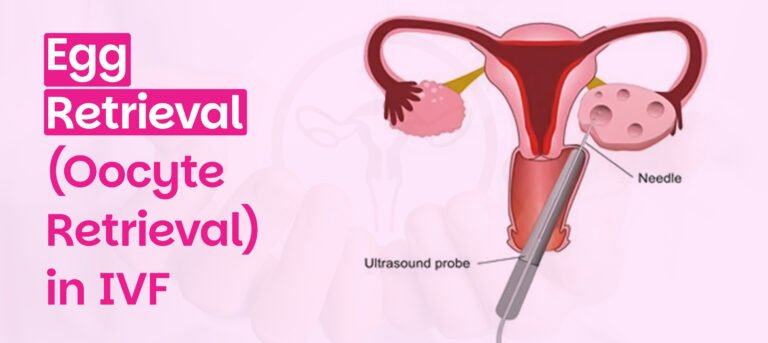
In In Vitro Fertilization (IVF), one of the most crucial steps is egg retrieval (oocyte retrieval). This is the process where mature eggs are collected from a woman’s ovaries before they are fertilized in a laboratory.
If you’re preparing for IVF, you may wonder:
- How is the egg retrieval procedure done?
- Is it painful?
- What happens before and after retrieval?
- Are there risks involved?
This comprehensive guide explains the entire process of oocyte retrieval, preparation tips, recovery, risks, and FAQs—so you know what to expect at every stage.
What is Egg Retrieval in IVF?
Egg retrieval (oocyte retrieval) is a minor surgical procedure performed during IVF to collect mature eggs from the ovaries. These eggs are then fertilized with sperm in the lab to create embryos, which can later be transferred into the uterus.
- Usually performed 34–36 hours after the hCG trigger shot.
- Conducted under mild sedation or anesthesia.
- It takes about 15–30 minutes.
It’s a critical step because the quality and number of eggs retrieved directly impact IVF success rates.
Step-by-Step Egg Retrieval Procedure
Here’s what happens during egg retrieval:
1. Ovarian Stimulation & Monitoring
- Fertility medications are used for 8–12 days to stimulate multiple follicles.
- Ultrasound scans and blood tests monitor egg growth.
2. Trigger Shot
- HCG or Lupron injection is given to mature the eggs.
- Retrieval is scheduled exactly 34–36 hours later.
3. Egg Retrieval Procedure
- Done under sedation (no pain felt).
- A thin needle attached to an ultrasound probe is inserted through the vaginal wall into the ovaries.
- Fluid from each follicle is aspirated, containing the eggs.
4. Laboratory Handling
- Embryologists identify and collect the eggs under a microscope.
- Eggs are placed in a nutrient-rich culture medium until fertilization.
Is Egg Retrieval Painful?
Most women do not feel pain during retrieval because of sedation or anesthesia. After the procedure, some may experience:
- Mild cramping or pelvic discomfort.
- Bloating from stimulated ovaries.
- Slight spotting for a day or two.
These symptoms are temporary and usually resolve within 2–3 days.
Recovery After Egg Retrieval
Recovery is usually quick and patients go home the same day.
Tips for a smooth recovery:
- Rest for 24 hours after the procedure.
- Avoid strenuous exercise or heavy lifting.
- Drink plenty of water and electrolyte fluids.
- Eat light, nutrient-rich meals.
- Use pain relievers prescribed by your doctor if needed.
Most women can return to normal activities within 1–2 days.
Risks and Side Effects of Egg Retrieval
Egg retrieval is considered safe, but like any medical procedure, it carries some risks:
- Ovarian Hyperstimulation Syndrome (OHSS): Rare, but can cause bloating, nausea, or fluid retention.
- Infection: Very uncommon, prevented with sterile technique.
- Bleeding or injury to pelvic organs: Extremely rare.
- Emotional stress: IVF can be emotionally draining; counseling helps.
With an experienced IVF clinic, these risks are minimal and manageable.
How Many Eggs Are Retrieved in IVF?
- On average, 8–15 eggs are collected per cycle.
- Not all eggs are mature or suitable for fertilization.
- The goal is to obtain multiple healthy eggs to increase chances of creating strong embryos.
Factors affecting egg number include:
- Age and ovarian reserve.
- Response to stimulation drugs.
- Underlying fertility conditions.
Egg Retrieval Success Factors
The success of IVF depends on:
- Age of the woman (egg quality declines after 35).
- Number of mature eggs retrieved.
- Embryo quality after fertilization.
- Clinic expertise and technology (ICSI, PGT, cryopreservation).
In India, IVF clinics like Vrinda Fertility (Noida) use advanced lab techniques and personalized protocols to maximize egg retrieval outcomes.
Cost of Egg Retrieval in India
Egg retrieval is included in the overall IVF package.
- Average IVF cycle cost in India: ₹1,20,000 – ₹2,00,000.
- This includes ovarian stimulation, monitoring, egg retrieval, fertilization, and embryo transfer.
- Additional costs may apply for ICSI, donor eggs, or embryo freezing.
Conclusion
Egg retrieval (oocyte retrieval) is a vital step in the IVF journey. While it may sound intimidating, the procedure is safe, quick, and usually painless under sedation. Success depends on multiple factors, including age, ovarian reserve, and clinic expertise.
At Vrinda Fertility, Noida, our team of fertility specialists ensures safe egg retrieval with advanced techniques, personalized care, and high-quality embryology labs. If you’re preparing for IVF, knowing what to expect during egg retrieval can make the journey less stressful and more hopeful.