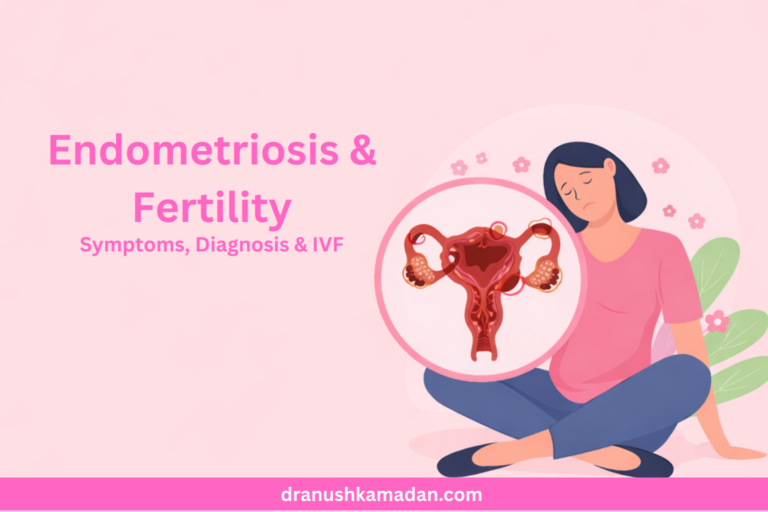
Endometriosis is one of the most common yet underdiagnosed causes of female infertility. Affecting nearly 10% of women of reproductive age, this chronic inflammatory condition can significantly impact reproductive health. Many women only discover they have endometriosis when they face difficulty conceiving.
It is crucial to comprehend the connection between endometriosis and fertility in order to make early diagnoses and gain effective treatment for infertility as well as enhance the possibility of conception. This complete resource will delve into the symptoms of endometriosis, diagnosis, fertility effects, and how IVF treatment can help.
What Is Endometriosis?
Endometriosis occurs when tissue similar to the uterine lining (endometrium) grows outside the uterus. These growths may develop on:
- Ovaries
- Fallopian tubes
- Pelvic lining
- Bladder or bowel (in advanced cases)
Unlike normal uterine lining, this tissue cannot exit the body during menstruation. As a result, it causes inflammation, scarring, adhesions, and chronic pelvic pain. Over time, this can interfere with ovulation, fertilization, and embryo implantation.
How Endometriosis Affects Fertility
Endometriotic disorder can reduce fertility through multiple mechanisms:
1. Ovarian Damage
Ovarian cysts called endometriomas may reduce ovarian reserve and negatively affect egg quality.
2. Blocked or Damaged Fallopian Tubes
Scar tissue can block or distort the fallopian tubes, preventing sperm from reaching the egg.
3. Chronic Inflammation
Inflammatory chemicals in pelvic fluid may interfere with fertilization and embryo development.
4. Impaired Implantation
Changes in the uterine environment may make implantation difficult.
Research indicates that 30–50% of women with Endometriotic disorder experience infertility, making early evaluation crucial.
Symptoms of Endometriosis
Symptoms vary widely. Some women experience severe pain, while others have minimal symptoms but significant fertility challenges.
Common Symptoms:
- Severe menstrual cramps (dysmenorrhea)
- Chronic pelvic pain
- Pain during intercourse
- Heavy or irregular menstrual bleeding
- Pain during bowel movements
- Difficulty conceiving
Important: The severity of symptoms does not always reflect the stage of the disease.
Stages of Endometriosis
Endometriosis is classified into four stages:
- Stage I – Minimal
- Stage II – Mild
- Stage III – Moderate
- Stage IV – Severe
The stage depends on lesion size, depth, location, and scar tissue formation. However, even mild disease can cause infertility.
Diagnosis of Endometriosis
Accurate diagnosis is essential for effective fertility planning.
Medical History & Clinical Evaluation
A fertility specialist reviews menstrual patterns, pelvic pain, and reproductive history.
Ultrasound
Transvaginal ultrasound can detect ovarian endometriomas but may not identify superficial lesions.
MRI Scan
MRI helps identify deep infiltrating endometriosis.
Laparoscopy (Gold Standard)
A minimally invasive surgical procedure that confirms diagnosis and allows removal of endometrial implants.
Early diagnosis allows timely fertility treatment and better pregnancy outcomes.
Can You Get Pregnant Naturally with Endometriosis?
Yes, especially in mild cases. However, fertility declines in moderate to severe stages.
Pregnancy chances depend on:
- Age
- Ovarian reserve (AMH levels)
- Severity of disease
- Duration of infertility
- Partner’s sperm health
If pregnancy does not occur within 6–12 months (or 6 months if over 35), fertility consultation is recommended.
IVF for Endometriosis: An Effective Fertility Treatment
In Vitro Fertilization (IVF) is often the most effective infertility treatment for women with moderate to severe endometriosis.
Why IVF Works
- Bypasses damaged or blocked fallopian tubes
- Retrieves eggs directly from ovaries
- Fertilizes eggs in a controlled laboratory
- Transfers healthy embryos into the uterus
treatment helps overcome many mechanical and inflammatory barriers caused by endometriosis.
IVF Success Rates in Endometriosis
success depends on:
- Woman’s age
- Ovarian reserve
- Severity of endometriosis
- Previous surgeries
Women under 35 with mild endometriosis often achieve success rates comparable to other infertility causes. Advanced disease may require customized stimulation protocols.
Should Surgery Be Done Before IVF?
Surgery may be considered if:
- Large ovarian cysts (endometriomas >4 cm)
- Severe pelvic pain
- Suspicion of malignancy
- Repeated IVF failures
However, unnecessary surgeries may reduce ovarian reserve. A personalized treatment plan is essential.
Advanced Fertility Techniques
In complex cases, specialists may recommend:
- ICSI (Intracytoplasmic Sperm Injection)
- Frozen embryo transfer
- Preimplantation genetic testing
- Ovarian reserve assessment (AMH testing)
These approaches enhance success rates in endometriosis-related infertility.
Lifestyle & Fertility Support
Although lifestyle changes cannot cure endometriosis, they may support reproductive health.
- Maintain healthy weight
- Follow anti-inflammatory diet
- Exercise regularly
- Reduce stress
- Avoid smoking and alcohol
A holistic fertility care plan improves IVF outcomes.
When to Consult a Fertility Specialist
Seek medical advice if:
- You have severe period pain
- You have been trying to conceive for 6–12 months
- You are over 35 and trying for 6 months
- You have known ovarian cysts
- You experience recurrent miscarriages
Early evaluation improves pregnancy chances significantly.
FAQs:
What is the main cause of infertility in endometriotic disorder?
Inflammation, ovarian damage, and blocked fallopian tubes are the primary factors.
Is IVF necessary for all women with endometriotic disorder ?
No. Mild cases may conceive naturally. IVF is often recommended for moderate to severe disease.
Can IVF cure endometriotic disorder ?
No. IVF treats infertility but does not cure the underlying condition.
Does pregnancy reduce Endometriotic disorder symptoms?
Pregnancy may temporarily reduce symptoms, but the condition can recur later.
What is the best treatment for endometriosis-related infertility?
Treatment depends on age, disease severity, and fertility goals. IVF is often the most effective option.
Expert Perspective
Endometriotic disorder is a complex reproductive disorder requiring specialized fertility care. Modern IVF techniques, advanced embryo selection, and individualized stimulation protocols have significantly improved outcomes for women with endometriosis.
A multidisciplinary approach involving fertility specialists, laparoscopic surgeons, and embryologists ensures evidence-based, patient-centered care aligned with international reproductive guidelines.
Conclusion
Endometriotic disorder can create significant fertility challenges, but it does not mean pregnancy is impossible. With early diagnosis, appropriate infertility treatment, and advanced IVF options, many women achieve successful pregnancies.
If you are experiencing symptoms of endometriosis or struggling with infertility, timely consultation with a fertility expert can help you explore the right treatment pathway.Personalized care, early intervention, and evidence-based fertility solutions can make all the difference in your journey to parenthood.
Available personalized consultation at a reliable fertility clinic and thus initiate your journey to parenthood. Dr. Anushka Madan at vrinda fertility is one of the most reliable IVF specialists to go to if you are embarking on a journey of parenthood and want to identify a reliable infertility centre in your locality. Get Direction