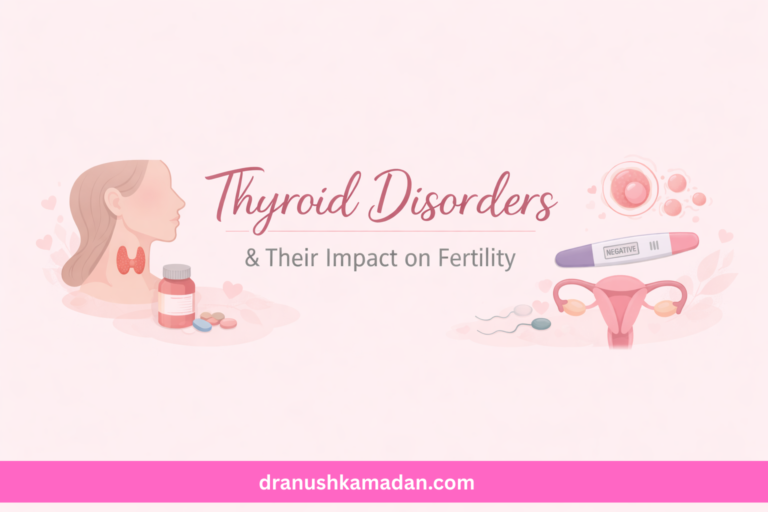
Thyroid Disorders and Their Effect on Fertility Fertility and thyroid disorders have a close interlink, yet couples who wish to conceive remain unaware of this important association. The thyroid gland, located in the neck as a small butterfly-shaped organ, greatly influences hormonal development overseeing metabolism, ovulation, sperm development, and pregnancy. Although thyroid imbalance may be mild, it can cause conception difficulties, lead to an increased risk of miscarriages, and hinder IVF therapy.
For couples struggling with infertility, especially in urban regions like Delhi NCR where lifestyle-related hormonal imbalances are rising, thyroid evaluation is a crucial part of fertility assessment. Understanding how thyroid disorders impact fertility can help couples seek timely diagnosis and appropriate infertility treatment.
What Are Thyroid Disorders?
The thyroid gland produces two essential hormones:
- T3 (Triiodothyronine)
- T4 (Thyroxine)
These hormones are regulated by TSH (Thyroid Stimulating Hormone) released by the pituitary gland.
When thyroid hormone levels become imbalanced, it leads to:
- Hypothyroidism – Underactive thyroid (low T3/T4, high TSH)
- Hyperthyroidism – Overactive thyroid (high T3/T4, low TSH)
- Subclinical thyroid disorders – Mild imbalance with subtle symptoms
- Autoimmune thyroid disease – Such as Hashimoto’s thyroiditis or Graves’ disease
Even mild thyroid dysfunction can disrupt reproductive hormones and affect fertility.
How Thyroid Disorders Affect Female Fertility
1. Irregular Ovulation
Interaction of Thyroid Hormones with Estrogen and Progesterone
Thyroid hormones have
- Cause irregular menstrual cycles
- Lead to anovulation (no egg release)
- Change the duration of the cycle.
- Reduce egg quality
Without ovulation, it is difficult to conceive naturally.
2. Polycystic Ovary Syndrome (PCOS) Connection
Besides, women suffering from hypothyroidism normally have insulin resistance, weight gain, and hormonal imbalance, which may be associated with PCOS, hence lowering fertility potential.
3. Increased Risk of Miscarriage
Uncontrolled thyroid disorders during early pregnancy may rsult in :
- Recurrent pregnancy loss
- Implantation failure
- Poor embryo development
- Preterm birth
Research indicates that if TSH blood levels are to be kept below 2.5 mIU/L, the pregnancy success rate in conception attempts is improved.
4. Impact on IVF Success Rates
In assisted reproductive treatments like IVF:
- High TSH levels may reduce implantation rates
- Thyroid antibodies can affect embryo development
- Poor thyroid control may increase cycle failure
That’s why fertility centres routinely check thyroid function before starting IVF treatment.
How Thyroid Disorders Affect Male Fertility
Thyroid disorders are not just a female issue. They significantly influence male reproductive health.
Effects on Men Include:
- Reduced sperm count
- Poor sperm motility
- Abnormal sperm morphology
- Erectile dysfunction
- Decreased libido
Hyperthyroidism may increase sperm abnormalities, while hypothyroidism can reduce testosterone levels.
Correcting thyroid imbalance often improves sperm parameters naturally.
Common Symptoms of Thyroid Disorders
Hypothyroidism Symptoms:
- Weight gain
- Fatigue
- Cold intolerance
- Depression
- Irregular periods
- Hair thinning
Hyperthyroidism Symptoms:
- Weight loss
- Anxiety
- Palpitations
- Excessive sweating
- Light or absent periods
However, some individuals have subclinical thyroid disorders without obvious symptoms — making testing essential in infertility evaluation.
Diagnosis: Thyroid Testing in Fertility Workup
If you are planning pregnancy or undergoing infertility treatment, doctors recommend:
- TSH test
- Free T3 and T4
- Thyroid antibody tests (Anti-TPO, Anti-TG)
In fertility patients, optimal TSH levels are usually maintained between 1.0–2.5 mIU/L.
Early diagnosis improves natural conception and assisted reproduction success.
Treatment of Thyroid Disorders for Fertility
1. Hypothyroidism Treatment
- Levothyroxine medication
- Regular TSH monitoring every 6–8 weeks
- Dose adjustment during pregnancy
Proper medication often restores ovulation and improves fertility within months.
2. Hyperthyroidism Treatment
- Anti-thyroid medications
- Radioactive iodine (in select cases)
- Surgery (rarely)
Stabilizing thyroid levels before conception is critical.
3. Lifestyle Management
Supporting thyroid health naturally includes:
- Balanced iodine intake
- Selenium-rich foods (nuts, seeds)
- Stress management
- Maintaining healthy weight
- Avoiding excessive soy intake
However, lifestyle changes should complement — not replace — medical treatment.
Thyroid Disorders During Pregnancy
Uncontrolled thyroid imbalance during pregnancy can lead to:
- Gestational hypertension
- Pre-eclampsia
- Low birth weight
- Neurodevelopmental issues in baby
That is why preconception thyroid screening is strongly recommended, especially for women in high-risk groups.
When to See a Fertility Specialist?
You should consult a fertility expert if:
- You have irregular periods
- You have been trying to conceive for 6–12 months
- You have a history of miscarriage
- You have known thyroid disease
- You are planning IVF or IUI
Comprehensive infertility treatment always includes thyroid evaluation as part of hormonal assessment.
Thyroid Disorders & Fertility in Delhi NCR
Urban stress, sedentary lifestyle, and dietary changes have increased thyroid disorders among reproductive-age individuals in cities like Delhi NCR.
At leading fertility centres in Delhi, thyroid screening is integrated into:
- Preconception counseling
- IVF preparation
- Recurrent miscarriage evaluation
- Male infertility assessment
Timely diagnosis and expert management significantly improve pregnancy outcomes.
Frequently Asked Questions (FAQs)
1. Can thyroid disorders cause infertility?
Yes. Both hypothyroidism and hyperthyroidism can disrupt ovulation, sperm production, and hormone balance, leading to infertility.
2. What TSH level is ideal for pregnancy?
For women trying to conceive, TSH should ideally be between 1.0–2.5 mIU/L.
3. Can I get pregnant with hypothyroidism?
Yes. With proper treatment and controlled TSH levels, many women conceive naturally or through fertility treatments.
4. Does thyroid affect IVF success?
Yes. Uncontrolled thyroid levels can reduce implantation rates and increase miscarriage risk. Stabilizing thyroid function improves IVF outcomes.
5. Should men get thyroid tests for infertility?
Absolutely. Thyroid imbalance can affect sperm count, motility, and testosterone levels.
6. Can treating thyroid improve fertility naturally?
In many cases, yes. Correcting thyroid imbalance restores ovulation and improves sperm health.
Key Takeaways
- Thyroid disorders significantly impact fertility in both men and women.
- Even mild thyroid imbalance can affect ovulation and sperm health.
- Early diagnosis improves natural conception and IVF success.
- Maintaining optimal TSH levels is crucial before and during pregnancy.
- Comprehensive infertility treatment must include thyroid evaluation.
Conclusion
The relationship between thyroid disorders and fertility cannot be emphasized sufficiently. Whether you conceive naturally or by means of IVF therapy, thyroid function is among the critical aspects to be taken into account. The good thing about thyroid and fertility challenges is that, once diagnosed timely and treated accordingly, fertility can be achieved successfully.
If you are planning to get pregnant or are facing problems related to infertility, it would be highly recommended to consult a qualified fertility expert to get a thorough evaluation regarding hormone levels. Proper treatment of thyroid hormone imbalance at an appropriate period can lead to highly positive outcomes.your chances of conception and ensure a healthy pregnancy journey.
Available personalized consultation at a reliable fertility clinic and thus initiate your journey to parenthood. Dr. Anushka Madan at vrinda fertility is one of the most reliable IVF specialists to go to if you are embarking on a journey of parenthood and want to identify a reliable infertility centre in your locality. Get Direction