Modern infertility solutions are becoming more successful and helping more couples realize the dream of starting a family. One of the lab methods used during IVF is Assisted Hatching. Not all patients require this method, however, the chances of successful embryo implantation are higher for those who do.
If your fertility specialist suggested Assisted Hatching, you might be asking yourself what it is, why it is done, and if it actually does improve your odds of becoming pregnant. The more you know about this process, the more you will be able to make informed choices about your fertility options.
In the following, we cover the basics of Assisted Hatching: how it works, who it is likely to help, the benefits, the risks, and we answer some common questions.
What is Hatching Assisted?
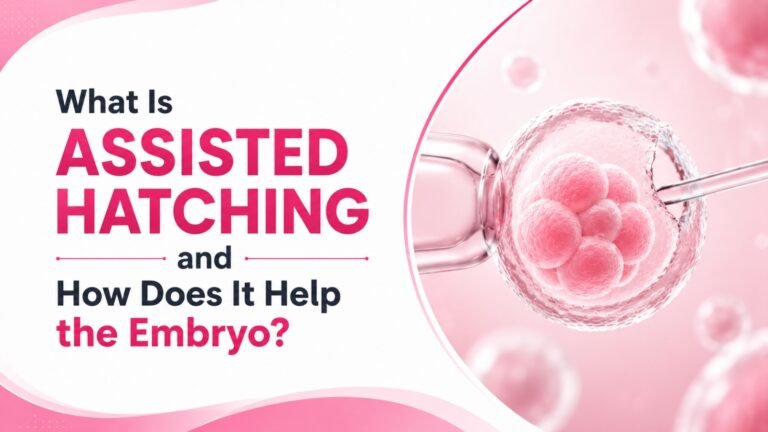
Assisted Hatching is a method used by embryologists during an IVF cycle to provide assistance to an embryo in breaking through the outer protective shell in order to implant.
Every embryo is naturally surrounded by a protective outer layer, known as the zona pellucida. Before an embryo is able to attach itself to the lining of the uterus, it must break through or ‘hatch’ out of this protective outer shell. In some cases, the zona pellucida is unusually hard or thick and can make hatching very difficult to achieve.
In this instance, or in order to assist an embryo in achieving hatching, the embryologist would either create a very small opening or would thin a portion of the zona pellucida using a highly precise laser or another specialized technique.
This aids the embryo’s ability to hatch, and likely improves the chances of the embryo’s successful implantation.
Why Is Hatching Important for Embryo Implantation?
For pregnancy to be established, there are several necessary steps the embryo has to go through:
– Fertilization
– Embryonic cell divisions
– Travel to the uterus
– Hatching from the zona pellucida
– Attachment to the uterine lining
– Implantation
If the embryo is healthy, but hatching is not occurring, then it is likely the embryo will also not implant. This is the barrier that is tried to be surpassed by Assisted Hatching.
How Does Assisted Hatching Work?
The procedure only happens in the IVF lab, and is done before the embryo is transferred.
The procedure is generally as follows:
1. The embryo is viewed by a high powered microscope.
2. Hatching location of the zona pellucida is chosen by the embryologist.
3. A microscopic opening is made, or a small portion is made thinner by a precision laser.
4. Development of the embryo is monitored.
5. The embryo is transferred to the uterus.
Laser-assisted hatching is preferred by most clinics, due to the accuracy and minimal invasiveness.
Who May Benefit from Assisted Hatching?
Assisted Hatching is not suited for every IVF candidate, and is only used in some cases.
If you have the following, then your doctor may suggest the procedure:
Advanced Maternal Age
Women aged over 35 may produce embryos which have a thicker zona pellucida. This may make hatching more difficult.
Previous Failed IVF Cycles
This procedure may be more helpful for patients that have had repeated unsuccessful embryo implantations following the transfer of good-quality embryos.
Frozen Embryo Transfers
The freeze and thaw process of cryopreservation may alter the outer shell of an embryo. The potential of Assisted Hatching to improve embryo implantation following a frozen embryo transfer.
Thick Zona Pellucida
It is natural for some embryos to have a thicker protective layer, which makes hatching more difficult.
Poor Embryo Quality
In some specific cases where embryo quality is low, embryologists may suggest that Assisted Hatching is used.
How Does Assisted Hatching Help the Embryo?
The main aim of Assisted Hatching is to assist embryos with implantation into the uterus.
The potential benefits of Assisted Hatching may include:
– Easier hatching for the embryo
– Better engagement with the uterine lining
– Greater implantation potential for select patients
– Improved pregnancy outcomes for select patients
– Additional aid for embryos with a thicker outer shell
It is important to understand that Assisted Hatching works by removing a barrier for embryo implantation, but it does not enhance the quality of an embryo.
What Are the Benefits of Assisted Hatching?
Assisted Hatching may have a variety of benefits based on the specific circumstances.
Improved Implantation Rates
Some studies report to have an improvement in implantation rates for select patients, particularly those that have experienced multiple IVF cycles that have resulted in pregnancy failure.
Better Pregnancy Outcomes
Assisted hatching does not guarantee pregnancy. There are several factors apart from assisted hatching that determine clinical pregnancy rates. The procedure can offer some potential positive benefits when assisted hatching is utilized in combination with other techniques.
There is no guarantee to becoming pregnant with any fertility treatment.
Although Assisted Hatching can increase chances of implantation for some patients, pregnancy depends on a number of factors. These factors include:
– The quality of the embryo
– The age of the mother
– The receptiveness of the uterus
– The balance of hormones
– The state of reproductive health
– The skill of the laboratory team
Your fertility specialist will be able to tell if Assisted Hatching is a good option based on the information in your medical history and the results of your IVF.
How Do Doctors Decide Whether You Need Assisted Hatching?
Your fertility specialist will take into account a number of factors when deciding to recommend Assisted Hatching. These factors include:
– The age of the female partner
– How many times IVF has been attempted with no success
– The state of the developed embryos
– The thickness of the zona pellucida
– If frozen embryos are being transferred
– The fertility history
This process is non-routine and done individually.
Questions to Ask Your Fertility Specialist
If Assisted Hatching has been suggested, ask your fertility specialist the following:
– Why is this procedure right for me?
– Will this be Laser Assisted Hatching?
– What is the success rate?
– What are the other risks for me?
– Will this procedure increase the costs?
– What are other options?
Having these conversations can make you feel more comfortable on your journey through IVF.
Conclusion
Assisted Hatching is an innovative technique in IVF that helps embryos break the Zona Pellucida.
Implantation rates may be higher for frozen embryo transfers for some IVF patients with repeated IVF failures, with advanced maternal age, and with frozen embryos that have a thicker zona pellucida, with or without assisted hatching.
The procedure is easy and quick. It is highly exact, and is used frequently by skilled embryologists with the aid of laser technology. Assisted Hatching is an amazing procedure, but cannot guarantee pregnancy or better the quality of an embryo. In very select cases, it can potentially help eliminate an obstacle to implantation.
If your fertility specialist suggests assisted hatching, make sure to speak to your specialist for the pros and cons and possible outcomes so that you can have the most tailored fertility treatment that is best for you.