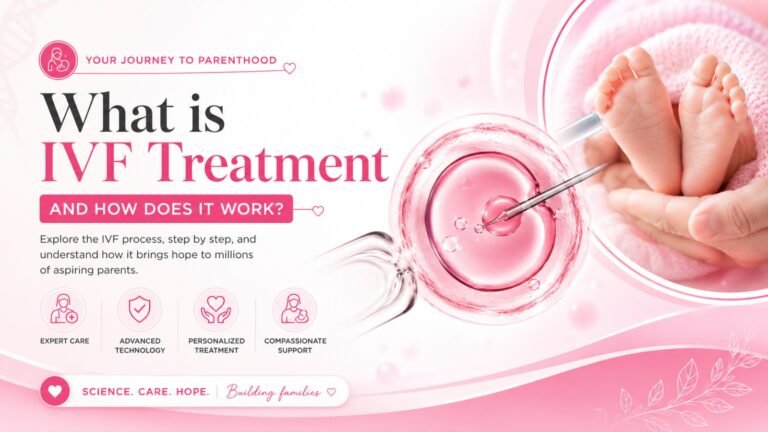
In Vitro Fertilization (IVF) is a specialized procedure developed in the field of reproductive science and is beneficial in the conception of a couple when traditional methods of conception fail. The IVF procedure involves the surgical removal of ova from the female for fertilization with male gametes in vitro (in a laboratory). The IVF process is completed with the implantation of the developed embryo into the female uterus.
It is estimated that worldwide, IVF is the most commonly used and most successful assisted reproductive technology (ART). IVF is especially useful for couples who are dealing with challenges related to infertility, such as reproductive ailments that restrict the transport of ovum/Sperm, Low sperm count, problems related to ovulation/endometriosis, unexplained infertility, and reproductive ageing.
Today, couples of all orientations use IVF as a means to realise their dream of parenthood.
How Does IVF Treatment Work?
ART (Assisted Reproductive Technologies) like IVF require a highly structured system of integrated steps. Each of the steps requires precision and has the aim of maximizing the chances of successful fertilization and implantation.
Step 1: Initial Fertility Evaluation
Prior to the commencement of IVF, a thorough evaluation is done by the fertility specialists and may comprise of:
– Hormone Testing
– Ultrasound Scans
– Semen Investigations
– Ovarian Reserve Testing
– Review of Medical History
This evaluation will then aid the fertility specialist in formulating a customised IVF treatment for the patient.
Step 2: Ovarian Stimulation
In a natural menstrual cycle, a woman typically releases one egg. During IVF, fertility medications stimulate the ovaries to produce multiple mature eggs.
Doctors monitor the response through:
– Blood tests
– Ultrasound Imaging
– Tracking hormone levels
This phase typically lasts 8-14 days.
Step 3: Egg Retrieval
Once the eggs reach full maturity, a minor surgical procedure known as follicular aspiration is performed to extract the eggs from the ovaries.
The procedure:
– Lasts around 20-30 minutes
– Is conducted with sedation
– Results in very little discomfort
Eggs that have been collected undergo immediate cryopreservation.
Step 4: Sperm Collection and Fertilization
A sperm sample is obtained from the male partner or donor. In the lab, scientists combine some healthy sperm with mature eggs.
Fertilization can take place using:
Conventional IVF
In a petri dish, sperm and eggs are combined naturally.
ICSI (Intracytoplasmic Sperm Injection)
A single sperm is injected into a single egg. Sperm in egg (ICSI) is conducted with male partner fertility issues.
Step 5: Embryo Development
Once eggs are fertilized, and they take the form of an embryo, they undergo embryonic development in the lab for a duration of 3-5 days.
During this time, scientists study:
– The division of cells
– The overall embryo quality
– The rate of growth
The embryos that are selected based on their health are transferred.
Step 6: Embryo Transfer
A selected embryo is placed in the uterus using a catheter that is very thin. This is an easy procedure that is done with no discomfort.
Once an embryo has been placed:
– The patient can return to their normal activities in a day
– Hormonal medications are continued
– A pregnancy test is done roughly two weeks later
Who Needs IVF Treatment?
There are many fertility related conditions that can make IVF the recommended course of action.
Common Reasons for IVF
– PCOS
– Issues with fallopian tubes
– Male factor
– Low sperm count/poor motility
– Ovulation disorders
– Endometriosis
– Unexplained fertility
– Genetic defects
– Advanced maternal age
IVF is also commonly used with:
– Donor eggs
– Donor sperm
– Surrogacy
– Gamete preservation
What Are the Success Rates of IVF?
Success rates depend on age, egg/sperm/embryo quality, the type of fertility issue, and the doctor’s expertise.Regardless, women under 35 have the best success rates.
Success rates also decline with age and improving success rates require multiple cycles of IVF. Fertility specialists can provide success rate estimations based on a detailed patient history.
Benefits of IVF Treatment
IVF provides numerous benefits for couples dealing with infertility.
Key Benefits:-
Increased Conception Rates
Higher success rates occur with the majority of conditions.
Genetic Testing Choice
Preimplantation Genetic Testing (PGT) helps in the occurrence of transfer of embryos with genetic disease.
Gamete Preservation
Eggs, sperm, and embryos can be frozen for future use.
IVF can be used by:
– The LGBT community
– Single parents
– Cancer survivors
– Couples with genetic defects
Risks and Side Effects of IVF
Like any procedure there are complications.
Risks
– Ovarian Hyper stimulation Syndrome (OHSS)
– Pregnancy with multiples
– Emotional distress
– Cramping and/or bloating
– Ectopic pregnancy
– Rare complications during egg extraction
Side effects typically occur without incident and are manageable with medical supervision.
What is the cost of IVF?
The cost of IVF depends on:
– The location
– The reputation of the clinic
– Number of cycles
– Additional medical procedures
– Medications
– Genetic testing costs
The cost of IVF in India is extremely competitive to many of the Western countries, while the country keeps high medical standards.
Improving The Chances of IVF Success:-
Healthy Living Habits
– Maintaining a normal body weight
– Eating healthy
– No smoking or alcohol
– Less stress
– Taking the medications
– Choosing a good fertility clinic
Both future parents need to be in normal health.
Fertility and the initial Emotional Impact
This is a long process and there can be many future impacts to the mental state.
Options available to support future parents include available;
– Counselling
– Support groups
– Fertility coaching
– Family support
Focus on mental health is extremely important during this time.
CONCLUSION
Efforts to increase medical and reproductive technologies have helped many couples achieve their hopes of becoming parents. IVF can be frightening if you are not knowledgeable about the process. Knowing the ins and outs will be advantageous for your mental readiness for the emotional ride.
IVF employs the latest medical technology in fertility to increase the chances of pregnancies. It’s designed to do so in the safest of ways. Although the emotional and physical costs of IVF can take their toll, know that the latest technologies make the process safer and the success rates increase.
You should get a hold of a fertility specialist if you are considering IVF. It’s the best way to get all the information you need to make the first baby step towards an IVF treatment of your own.