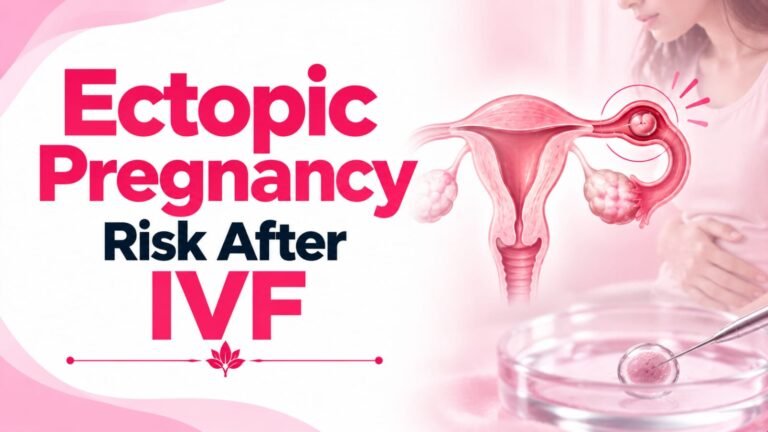
IVF (In Vitro Fertilization) has helped many couples achieve pregnancy when natural conception is difficult. However, like any pregnancy, an IVF pregnancy can sometimes involve complications. One of these is ectopic pregnancy after IVF, a condition that requires early diagnosis and appropriate medical care.
An ectopic pregnancy occurs when a fertilized egg implants outside the normal cavity of the uterus. Most ectopic pregnancies develop in a fallopian tube, although implantation can occur in other locations in rare cases.
Although ectopic pregnancy is not common, assisted reproductive technology such as IVF can be associated with an increased risk compared with spontaneous conception. This is why early pregnancy monitoring after IVF is particularly important.
In this guide, we explain ectopic pregnancy after IVF, its risk factors, symptoms, diagnosis, treatment options, prevention, and when emergency medical attention is needed.
What Is an Ectopic Pregnancy?
A normal pregnancy begins when a fertilized egg implants in the lining of the uterus.
An ectopic pregnancy occurs when the fertilized egg implants somewhere outside the main cavity of the uterus.
The most common location is the fallopian tube, which is why ectopic pregnancy is often referred to as a tubal pregnancy.
Less commonly, an ectopic pregnancy can occur in:
- The ovary
- Cervix
- Abdominal cavity
- Cesarean-section scar
- Interstitial or other areas of the uterus
An ectopic pregnancy cannot develop normally to term outside the uterine cavity. Without appropriate treatment, it can potentially cause serious internal bleeding.
Can Ectopic Pregnancy Happen After IVF?
Yes.
Even though an embryo is transferred directly into the uterus during IVF, ectopic pregnancy can still occur.
After embryo transfer, an embryo may move within the reproductive tract and, in some cases, implant outside the uterine cavity.
Therefore, IVF does not completely eliminate the possibility of ectopic pregnancy.
This is one reason fertility specialists generally recommend early pregnancy monitoring following IVF.
What Is the Risk of Ectopic Pregnancy After IVF?
The risk of ectopic pregnancy varies depending on the individual patient and the type of fertility treatment.
Research has reported different ectopic pregnancy rates following IVF and other forms of assisted reproductive technology because study populations, treatment protocols, and patient characteristics differ.
Factors that may influence risk include:
- Previous ectopic pregnancy
- Damaged or abnormal fallopian tubes
- Previous pelvic infection
- Pelvic inflammatory disease
- Endometriosis
- Previous tubal surgery
- Certain causes of infertility
- Previous assisted reproductive treatment
Therefore, there is no single percentage that accurately represents the risk for every IVF patient.
The important point is that ectopic pregnancy remains possible after IVF, even when the embryo has been transferred into the uterus.
Why Does Ectopic Pregnancy Occur After IVF?
A common question is:
“If the embryo is placed inside the uterus during IVF, how can it become ectopic?”
Embryo transfer places the embryo inside the uterine cavity, but implantation occurs later.
In rare cases, the embryo may migrate toward a fallopian tube or another location and implant outside the uterus.
Tubal damage or abnormalities may also influence the risk.
It is important to understand that an ectopic pregnancy is not necessarily caused by an error during embryo transfer. Multiple biological and patient-related factors can contribute.
Risk Factors for Ectopic Pregnancy After IVF
Some patients have a higher risk of ectopic pregnancy because of their reproductive or medical history.
1. Previous Ectopic Pregnancy
Having had an ectopic pregnancy in the past can increase the risk of another ectopic pregnancy.
Patients with a previous ectopic pregnancy should inform their fertility specialist as early as possible after a positive pregnancy test.
2. Fallopian Tube Damage
Previous infection, inflammation, surgery, or other conditions can damage the fallopian tubes.
Changes in the structure or function of the tubes may affect how an embryo moves within the reproductive tract.
3. Pelvic Inflammatory Disease
Certain pelvic infections can cause scarring of the reproductive organs and fallopian tubes.
This may increase the risk of ectopic pregnancy.
4. Endometriosis
Endometriosis can affect reproductive anatomy and fertility and may be associated with an increased risk of ectopic pregnancy in some patients.
5. Previous Tubal Surgery
Surgery involving the fallopian tubes may alter their structure or function.
Patients with a history of tubal surgery should discuss their individual risk with their fertility specialist.
Symptoms of Ectopic Pregnancy After IVF
The symptoms of an ectopic pregnancy can initially resemble those of a normal early pregnancy.
Possible symptoms include:
- Lower abdominal pain
- Pelvic pain
- Pain that is more noticeable on one side
- Vaginal spotting or bleeding
- Shoulder-tip pain
- Dizziness
- Weakness
- Fainting or feeling faint
- Abdominal discomfort
Not every patient will experience all of these symptoms.
Some ectopic pregnancies may initially cause few or no obvious symptoms and may be identified during an early ultrasound.
Is Abdominal Pain After IVF Normal?
Mild abdominal discomfort after IVF can occur for several reasons.
Possible causes include:
- Ovarian stimulation
- Hormonal changes
- Recovery after egg retrieval
- Bloating
- Normal early pregnancy changes
Therefore, not every episode of abdominal pain indicates an ectopic pregnancy.
However, pregnancy accompanied by severe, persistent, or one-sided abdominal pain should not be ignored.
If pain occurs along with vaginal bleeding, dizziness, fainting, or significant weakness, prompt medical assessment is important.
Emergency Warning Signs of Ectopic Pregnancy
An ectopic pregnancy can become a medical emergency if the pregnancy causes rupture and internal bleeding.
Seek immediate emergency medical care if you experience:
- Sudden or severe abdominal pain
- Severe pain on one side of the abdomen
- Heavy vaginal bleeding
- Severe dizziness
- Fainting
- Extreme weakness
- Shoulder-tip pain accompanied by abdominal symptoms
- Sudden worsening of pain
- Symptoms suggesting significant blood loss
Do not wait for a routine fertility appointment if these symptoms occur.
How Is Ectopic Pregnancy Diagnosed After IVF?
Doctors typically use a combination of medical history, symptoms, blood tests, and ultrasound.
1. Beta-hCG Blood Test
Beta-hCG is a hormone produced during pregnancy.
Doctors may measure beta-hCG levels and repeat the test over time when necessary.
However, a beta-hCG test alone cannot definitively diagnose an ectopic pregnancy.
2. Transvaginal Ultrasound
A transvaginal ultrasound is an important tool for determining the location and development of an early pregnancy.
The doctor may look for evidence of a pregnancy within the uterus and assess the surrounding structures.
If the pregnancy test is positive but an intrauterine pregnancy cannot yet be identified, additional monitoring may be required.
3. Symptoms and Medical History
Doctors also consider:
- Previous ectopic pregnancy
- Tubal disease
- IVF history
- Abdominal pain
- Vaginal bleeding
- Pregnancy hormone levels
- Ultrasound findings
A combination of these factors helps the medical team determine the appropriate next steps.
When Is the First Ultrasound Done After IVF?
The timing of an early pregnancy ultrasound varies depending on:
- Embryo transfer date
- Beta-hCG levels
- Pregnancy dating
- Symptoms
- Previous ectopic pregnancy
- Medical history
- Fertility clinic protocol
The purpose of early ultrasound is to confirm the location and development of the pregnancy.
If a patient develops pain or bleeding, an assessment may be recommended sooner than the routine scan.
Can Ectopic Pregnancy Be Prevented After IVF?
Ectopic pregnancy cannot always be completely prevented.
However, identifying risk factors before treatment can help doctors understand an individual’s risk and plan appropriate monitoring.
Before IVF, your fertility specialist may review:
- Previous ectopic pregnancies
- Fallopian tube health
- Previous pelvic infections
- Endometriosis
- Previous tubal surgery
- Infertility diagnosis
- Previous fertility treatments
Embryo transfer technique and the number of embryos transferred are also considered as part of the overall IVF treatment plan.
Even with careful treatment, however, the risk cannot be reduced to zero.
Treatment for Ectopic Pregnancy
The appropriate treatment depends on several factors, including:
- Location of the ectopic pregnancy
- Pregnancy size
- Beta-hCG level
- Symptoms
- Evidence of internal bleeding
- Overall health
- Whether the pregnancy has ruptured
Treatment may involve expectant management, medication, or surgery.
1. Expectant Management
In carefully selected early cases, an ectopic pregnancy may resolve without active medical treatment.
The doctor may monitor beta-hCG levels and symptoms closely.
This approach is only appropriate for certain patients and requires medical supervision.
2. Methotrexate Treatment
Methotrexate is a medication that can be used in selected ectopic pregnancies.
It works by stopping the growth of rapidly dividing pregnancy tissue.
Methotrexate is not appropriate for everyone. A doctor must assess factors such as:
- Clinical stability
- Pregnancy location
- Beta-hCG level
- Ultrasound findings
- Presence or absence of significant bleeding
- Other medical considerations
Patients receiving methotrexate require appropriate follow-up until the pregnancy hormone level has fallen as expected.
3. Surgical Treatment
Surgery may be required if:
- The ectopic pregnancy has ruptured
- There is significant internal bleeding
- Medication is unsuitable
- The ectopic pregnancy is not responding appropriately to medical management
- The patient’s clinical condition requires urgent intervention
The type of surgery depends on the location of the ectopic pregnancy and the condition of the fallopian tubes and surrounding structures.
Can a Baby Be Saved in an Ectopic Pregnancy?
Unfortunately, an ectopic pregnancy cannot develop safely into a normal full-term pregnancy when it is implanted outside the uterine cavity.
Treatment is therefore focused on protecting the patient’s health and preventing potentially life-threatening complications.
An ectopic pregnancy cannot simply be moved from the fallopian tube into the uterus.
What Is a Heterotopic Pregnancy After IVF?
A heterotopic pregnancy is a rare condition in which two pregnancies occur simultaneously:
- One pregnancy develops inside the uterus.
- Another pregnancy develops outside the uterus, often in a fallopian tube.
Heterotopic pregnancy is more relevant in the context of assisted reproduction because its incidence can be higher than in spontaneous conception.
This means that seeing an intrauterine pregnancy on ultrasound does not always completely exclude a simultaneous ectopic pregnancy, particularly if concerning symptoms develop.
Severe abdominal pain or other warning signs should therefore be evaluated promptly.
Can You Have Another Pregnancy After an Ectopic Pregnancy?
Yes, many women can become pregnant again after an ectopic pregnancy.
Future fertility depends on factors such as:
- Condition of the remaining fallopian tube
- Whether one or both tubes were affected
- Treatment received
- Underlying infertility cause
- Age
- Ovarian reserve
- Previous fertility treatment
If both fallopian tubes are severely damaged or have been removed, IVF may provide an important route to pregnancy because fertilization takes place outside the fallopian tubes.
However, IVF does not completely eliminate the possibility of another ectopic pregnancy.
IVF After Ectopic Pregnancy
For patients who have experienced an ectopic pregnancy following IVF, the fertility specialist may review the previous cycle before planning another treatment.
The doctor may consider:
- How the previous ectopic pregnancy was treated
- Fallopian tube status
- Embryo transfer history
- Number of embryos transferred
- Underlying infertility diagnosis
- Previous IVF outcomes
- Other reproductive risk factors
A personalized treatment and monitoring plan can then be developed.
What to Do After a Positive Pregnancy Test Following IVF?
If your IVF pregnancy test is positive:
Step 1: Contact your fertility clinic
Tell your fertility specialist about the positive result and provide the requested beta-hCG information.
Step 2: Follow the recommended blood tests
Your clinic may recommend serial beta-hCG measurements.
Step 3: Attend your early ultrasound
An early transvaginal ultrasound can help establish the location of the pregnancy.
Step 4: Report unusual symptoms
Tell your doctor about:
- Abdominal pain
- Pelvic pain
- Vaginal bleeding
- Dizziness
- Shoulder pain
- Fainting
Step 5: Seek emergency care when necessary
Severe pain, heavy bleeding, fainting, or significant dizziness requires immediate medical evaluation.
Common Myths About Ectopic Pregnancy After IVF
Myth 1: IVF Completely Prevents Ectopic Pregnancy
Fact: IVF reduces some barriers associated with natural conception but does not eliminate the possibility of ectopic pregnancy.
Myth 2: A Positive Pregnancy Test Means the Pregnancy Is in the Uterus
Fact: A pregnancy test detects pregnancy hormones. It does not establish the location of the pregnancy.
An ultrasound is needed to assess pregnancy location.
Myth 3: Every Abdominal Pain After IVF Means Ectopic Pregnancy
Fact: Abdominal discomfort can have several causes during IVF and early pregnancy.
However, severe or one-sided pain, particularly when accompanied by bleeding or dizziness, requires medical evaluation.
Myth 4: Ectopic Pregnancy Means You Cannot Become Pregnant Again
Fact: Many women have successful pregnancies after an ectopic pregnancy. Future fertility depends on individual circumstances, particularly the condition of the fallopian tubes and the underlying cause of infertility
When Should You Contact Your Doctor After IVF?
Contact your if you experience:
- New or persistent abdominal pain
- One-sided pelvic pain
- Vaginal bleeding or spotting
- Increasing discomfort
- Unusual weakness or dizziness
Seek emergency medical attention for:
- Severe or sudden abdominal pain
- Heavy bleeding
- Fainting
- Severe dizziness
- Shoulder-tip pain with abdominal symptoms
- Signs of possible internal bleeding
Early assessment can be extremely important in detecting and treating an ectopic pregnancy before serious complications occur.
Conclusion
Ectopic Pregnancy After IVF is an uncommon but potentially serious complication that every IVF patient should understand.
Although the embryo is transferred into the uterus, implantation can occasionally occur outside the uterine cavity, most commonly in a fallopian tube. Previous ectopic pregnancy, tubal damage, pelvic infection, endometriosis, and certain reproductive factors may influence the risk.
Early pregnancy monitoring with beta-hCG testing and transvaginal ultrasound can help doctors assess pregnancy location and development.
Most importantly, do not ignore warning signs such as severe abdominal pain, one-sided pelvic pain, vaginal bleeding, dizziness, fainting, or shoulder-tip pain. These symptoms may require urgent medical evaluation.
If you have received a positive IVF pregnancy test, follow your fertility clinic’s recommended monitoring schedule and contact your doctor promptly if you develop unusual symptoms. Early diagnosis and appropriate treatment are essential for protecting your health.
Visit Vrinda Fertility
Take the next step toward your parenthood journey with expert fertility care, advanced treatments, and personalized treatment plans.
Visit Vrinda Fertility today and consult experienced fertility specialists to understand your fertility needs and explore the right treatment options for you.