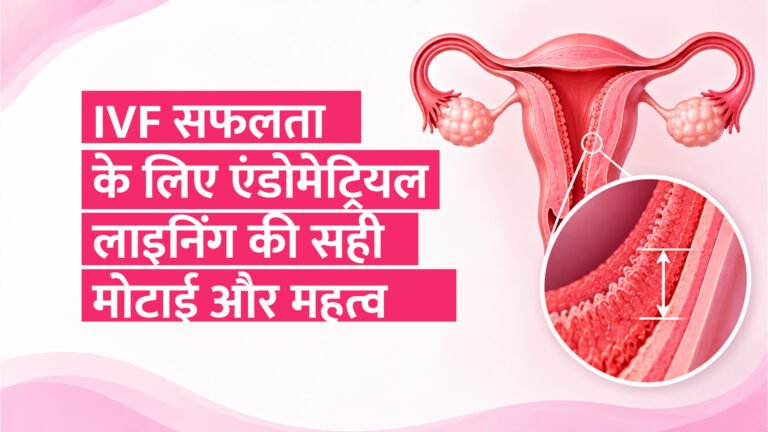
IVF Success के लिए Endometrial Lining Thickness
IVF treatment में embryo को uterus में transfer करने से पहले fertility specialist कई factors का मूल्यांकन करते हैं। इनमें से एक महत्वपूर्ण factor endometrial lining thickness है।
Endometrium यानी uterus की अंदरूनी lining वह tissue है जहां embryo implantation के बाद pregnancy विकसित होती है। IVF cycle के दौरान ultrasound से इसकी thickness और appearance को monitor किया जाता है ताकि embryo transfer के लिए uterine environment उपयुक्त है या नहीं, इसका आकलन किया जा सके।
आमतौर पर 7–10 mm की endometrial thickness को IVF और embryo transfer के लिए favorable range माना जाता है। कई studies में बहुत thin lining, विशेषकर लगभग 6–7 mm से कम, को lower implantation और live-birth rates से जोड़ा गया है। हालांकि, कोई एक ऐसी thickness नहीं है जो IVF success की guarantee दे।
महत्वपूर्ण बात: Endometrial thickness केवल IVF success का एक factor है। Embryo quality, महिला की उम्र, uterine health, hormonal preparation और embryo transfer timing भी महत्वपूर्ण भूमिका निभाते हैं।
Endometrial Lining क्या है?
Endometrial lining uterus की सबसे अंदरूनी परत होती है। प्रत्येक menstrual cycle में hormones के प्रभाव से यह lining बदलती है।
Estrogen endometrium को बढ़ने और मोटा होने में मदद करता है। Ovulation के बाद progesterone lining में ऐसे बदलाव करता है जिससे वह संभावित embryo implantation के लिए तैयार हो सके।
इसलिए menstrual cycle के दौरान endometrial thickness एक जैसी नहीं रहती।
Menstrual cycle में lining के मुख्य चरण
1. Menstrual Phase:
Periods के दौरान पुरानी endometrial lining shed होती है और thickness कम होती है।
2. Proliferative Phase:
Estrogen के प्रभाव से lining दोबारा विकसित और मोटी होने लगती है।
3. Ovulation के आसपास:
Lining अधिक विकसित होती है और ultrasound पर कई बार trilaminar या triple-line pattern दिखाई देता है।
4. Secretory Phase:
Ovulation के बाद progesterone endometrium को implantation के लिए functional रूप से तैयार करता है।
इसी कारण IVF में thickness को हमेशा cycle day और treatment protocol के संदर्भ में समझा जाता है।
IVF के लिए Ideal Endometrial Thickness कितनी होनी चाहिए?
IVF के लिए कोई universally accepted “perfect” endometrial thickness नहीं है। फिर भी, clinical practice और research में 7–10 mm को अक्सर favorable range माना जाता है।
एक बड़े अध्ययन में 96,000 से अधिक embryo-transfer cycles का विश्लेषण किया गया। Fresh embryo transfer में live-birth rates thickness बढ़ने के साथ लगभग 10–12 mm तक बेहतर हुए, जबकि frozen embryo-transfer cycles में outcomes लगभग 7–10 mm के आसपास plateau होते दिखाई दिए। 6 mm से कम thickness में live-birth rates काफी कम पाए गए।
एक अन्य बड़े study में 44,000 से अधिक fresh और frozen embryo-transfer cycles का analysis किया गया। Fresh cycles में लगभग 8 mm से कम तथा frozen-thaw cycles में लगभग 7 mm से कम thickness के साथ pregnancy और live-birth outcomes कम favorable पाए गए।
इसलिए IVF में केवल एक निश्चित number को target करने के बजाय पूरी clinical situation को देखना अधिक उचित है।
Endometrial Thickness Chart for IVF
नीचे दी गई table research में देखे गए सामान्य associations को समझने के लिए है:
| Endometrial Thickness | IVF में सामान्य interpretation |
|---|---|
| <6 mm | बहुत thin; success rates कम हो सकते हैं |
| 6–6.9 mm | अपेक्षाकृत thin |
| 7–7.9 mm | अक्सर acceptable/favorable |
| 8–9.9 mm | सामान्यतः favorable |
| 10–12 mm | कई studies में favorable |
| >12–14 mm | केवल thickness के आधार पर खराब outcome नहीं माना जाता |
यह याद रखना जरूरी है कि यह कोई universal medical cutoff नहीं है। अलग-अलग patients और IVF protocols में clinical decisions अलग हो सकते हैं।
क्या 6 mm Endometrial Lining IVF के लिए बहुत Thin है?
6 mm या उससे कम lining को thin माना जा सकता है, और IVF research में इतनी पतली lining को generally less favorable outcomes से जोड़ा गया है।
एक बड़े analysis में 6 mm से कम endometrial thickness के साथ live-birth rates में स्पष्ट कमी देखी गई।
लेकिन इसका मतलब यह नहीं है कि 6 mm lining के साथ pregnancy असंभव है।
Fertility specialist यह देख सकते हैं कि:
- lining लगातार thin है या केवल इस cycle में,
- estrogen response कैसा है,
- uterine cavity में कोई abnormality तो नहीं,
- previous uterine procedures हुए हैं या नहीं,
- embryo की quality कैसी है,
- और क्या treatment protocol में बदलाव उपयोगी हो सकता है।
इसलिए 6 mm की report देखकर अपने आप IVF failure की संभावना तय नहीं करनी चाहिए।
क्या 7 mm Endometrial Thickness IVF के लिए अच्छी है?
हाँ, 7 mm lining IVF और embryo transfer के लिए acceptable और कई परिस्थितियों में favorable हो सकती है।
Historically, 7 mm को IVF में एक महत्वपूर्ण reference measurement के रूप में इस्तेमाल किया गया है। Research में 7 mm या उससे कम thickness के साथ कुछ outcomes कम पाए गए हैं, लेकिन endometrial thickness की predictive ability सीमित है।
एक systematic review और meta-analysis ने निष्कर्ष दिया कि 7 mm से कम या बराबर thickness कुछ IVF outcomes में lower success से associated हो सकती है, लेकिन केवल इस measurement के आधार पर treatment को automatically cancel करने का पर्याप्त आधार नहीं है।
इसलिए 7 mm का अर्थ “pregnancy नहीं होगी” नहीं है।
क्या 8 mm Lining IVF Success के लिए अच्छी है?
8 mm endometrial lining को आमतौर पर favorable measurement माना जाता है।
यदि embryo transfer से पहले ultrasound में lining लगभग 8 mm है और उसका pattern भी उचित है, तो कई patients में यह reassuring finding हो सकती है।
हालांकि, 8 mm और 9 mm या 10 mm के बीच छोटा difference अपने आप IVF outcome निर्धारित नहीं करता।
एक बड़े blastocyst-transfer study में 7–7.9 mm, 8–8.9 mm और 9–9.9 mm groups की तुलना की गई। Unadjusted outcomes में differences दिखाई दिए, लेकिन relevant patient और treatment factors को adjust करने के बाद live-birth rates में significant differences नहीं रहे।
इससे पता चलता है कि 8 mm को एक अच्छा measurement माना जा सकता है, लेकिन अधिक thickness हमेशा बेहतर नहीं होती।
क्या 9 mm Endometrial Lining IVF के लिए Ideal है?
9 mm lining सामान्यतः favorable range में आती है।
9 mm thickness यह संकेत दे सकती है कि endometrium ने estrogen के प्रति अच्छा response दिया है। यदि ultrasound appearance भी favorable है और बाकी IVF factors अच्छे हैं, तो यह embryo transfer के लिए reassuring finding हो सकती है।
फिर भी, 9 mm को कोई mandatory target नहीं समझना चाहिए।
IVF success में embryo quality और reproductive factors का प्रभाव endometrial thickness के छोटे differences से कहीं अधिक महत्वपूर्ण हो सकता है।
क्या 10 mm Endometrial Thickness IVF Success के लिए Best है?
10 mm को कई IVF studies में favorable outcome से जोड़ा गया है, विशेषकर fresh embryo-transfer cycles में।
25,000 से अधिक fresh embryo-transfer cycles के एक बड़े study में endometrial thickness बढ़ने के साथ live-birth rate बढ़ने की trend देखी गई और लगभग 10 mm thickness favorable outcomes से associated थी।
लेकिन इसका अर्थ यह नहीं है कि IVF के लिए हर patient को 10 mm lining तक पहुंचना आवश्यक है।
Frozen embryo transfer में कुछ बड़े studies में live-birth outcomes लगभग 7–10 mm के बाद plateau होते दिखाई दिए।
इसलिए 10 mm एक अच्छा measurement हो सकता है, लेकिन IVF success के लिए अनिवार्य number नहीं है।
क्या ज्यादा मोटी Endometrial Lining IVF Success बढ़ाती है?
यह कहना सही नहीं होगा कि “जितनी मोटी lining, उतनी ज्यादा IVF success.”
बहुत thin endometrium के साथ outcomes कम favorable हो सकते हैं, लेकिन एक बार lining favorable range में पहुंचने के बाद अतिरिक्त 1–2 mm का महत्व हर patient में समान नहीं होता।
एक meta-analysis में 7 mm से कम thickness को poorer IVF outcomes से जोड़ा गया, लेकिन 14 mm से अधिक thickness को intermediate measurements की तुलना में स्पष्ट रूप से खराब pregnancy outcomes से नहीं जोड़ा गया।
इसलिए fertility specialist केवल thickness को नहीं देखते। वे ultrasound appearance, hormone levels, uterine cavity और treatment history को भी ध्यान में रखते हैं।
Thin Endometrium IVF Success को कैसे प्रभावित कर सकता है?
Thin endometrium IVF treatment में एक चुनौती हो सकता है।
Research में विशेष रूप से बहुत thin lining को:
- Lower implantation rate
- Lower clinical pregnancy rate
- Lower live-birth rate
से associate किया गया है।
लेकिन association का अर्थ यह नहीं है कि thin lining pregnancy को असंभव बना देती है।
एक व्यक्ति का actual IVF outcome population-level statistics से अलग हो सकता है। इसलिए fertility specialist को individual circumstances के आधार पर decision लेना चाहिए।
Thin Endometrium के संभावित कारण
अगर IVF treatment के दौरान lining अपेक्षित रूप से नहीं बढ़ती है, तो डॉक्टर संभावित कारणों की जांच कर सकते हैं।
इनमें शामिल हो सकते हैं:
1. Previous Uterine Procedures
कुछ uterine procedures के बाद intrauterine adhesions बन सकती हैं, जो endometrial development को प्रभावित कर सकती हैं।
2. Intrauterine Adhesions
Uterine cavity में adhesions या scar tissue lining के development को प्रभावित कर सकते हैं।
3. Hormonal Factors
Estrogen response पर्याप्त न होने पर endometrium अपेक्षित thickness तक नहीं पहुंच सकता।
4. Uterine Abnormalities
Polyps, fibroids या अन्य cavity-related abnormalities की जांच की आवश्यकता हो सकती है।
5. Previous Infection or Inflammation
कुछ स्थितियों में uterine environment प्रभावित हो सकता है।
6. Individual Variation
कभी-कभी thorough evaluation के बाद भी thin endometrium का स्पष्ट कारण नहीं मिलता।
IVF में Endometrial Lining कैसे Monitor की जाती है?
IVF cycle के दौरान transvaginal ultrasound से endometrial lining की निगरानी की जाती है।
Doctor केवल thickness ही नहीं बल्कि यह भी देख सकते हैं:
- Endometrial pattern
- Uterine cavity
- Follicular development
- Ovulation या hormonal response
- अन्य ultrasound findings
यदि fresh embryo transfer planned है, तो stimulation cycle के दौरान lining monitor की जा सकती है।
Frozen embryo transfer यानी FET में estrogen preparation के दौरान lining की thickness देखी जाती है और clinic के protocol के अनुसार progesterone तथा embryo-transfer timing निर्धारित किया जाता है।
Trilaminar Endometrium क्या है?
IVF में endometrial thickness के साथ उसका appearance या pattern भी महत्वपूर्ण हो सकता है।
Ovulation के आसपास ultrasound में endometrium में तीन अलग-अलग lines दिखाई देने पर इसे trilaminar या triple-line pattern कहा जाता है।
कई fertility specialists इसे favorable ultrasound characteristic मानते हैं।
हालांकि, trilaminar pattern भी pregnancy की guarantee नहीं है। Endometrial thickness और pattern को embryo quality तथा hormonal synchronization जैसे factors के साथ interpret किया जाता है।
IVF Success के लिए Endometrial Thickness के अलावा क्या महत्वपूर्ण है?
IVF success केवल endometrial lining पर निर्भर नहीं करती।
Embryo Quality
Embryo की developmental और genetic potential implantation की संभावना में महत्वपूर्ण भूमिका निभाती है।
महिला की उम्र
Age egg quality और embryo chromosomal abnormalities की संभावना को प्रभावित करती है।
Uterine Health
Polyps, cavity-distorting fibroids, adhesions और अन्य uterine problems implantation को प्रभावित कर सकते हैं।
Hormonal Synchronization
विशेष रूप से frozen embryo transfer में progesterone exposure और embryo transfer का सही timing महत्वपूर्ण होता है।
Embryo Transfer Technique
Embryo को uterus में transfer करने की प्रक्रिया और IVF laboratory factors भी overall outcome में योगदान करते हैं।
इसलिए केवल ultrasound report में “8 mm” या “10 mm” देखकर IVF success की संभावना तय नहीं की जा सकती।
क्या Endometrial Thickness बढ़ाई जा सकती है?
यदि lining लगातार thin रहती है, तो doctor पहले underlying cause identify करने की कोशिश कर सकते हैं।
Treatment patient की स्थिति के अनुसार अलग हो सकता है। इसमें hormonal preparation में बदलाव या अन्य medical approaches शामिल हो सकते हैं।
हालांकि, internet पर बताए जाने वाले सभी treatments scientifically proven नहीं हैं।
उदाहरण के लिए, G-CSF जैसे treatments के संबंध में evidence अभी mixed/heterogeneous है और अधिक research की आवश्यकता है।
इसलिए fertility treatment के दौरान किसी भी supplement, medicine, aspirin, hormone या procedure को अपने आप शुरू नहीं करना चाहिए।
Fresh IVF और Frozen Embryo Transfer में Endometrial Thickness
Fresh और frozen embryo-transfer cycles में endometrial thickness और reproductive outcomes के बीच relationship एक जैसा नहीं हो सकता।
बड़े studies में fresh cycles में live-birth rate लगभग 10–12 mm तक बढ़ने की trend दिखाई गई, जबकि frozen cycles में लगभग 7–10 mm के आसपास plateau देखा गया।
इसलिए Fresh IVF और FET के लिए एक ही rigid thickness target लागू करना सही नहीं है।
आपकी fertility clinic treatment protocol, embryo stage और hormonal preparation के अनुसार decision लेती है।
IVF से पहले Endometrial Thickness कब Check की जाती है?
Timing IVF protocol पर निर्भर करती है।
Fresh IVF Cycle
Ovarian stimulation के दौरान ultrasound से endometrial development monitor किया जा सकता है।
Frozen Embryo Transfer
Estrogen preparation के बाद lining की thickness और uterine environment assess किया जा सकता है।
Natural FET Cycle
Ovulation के आसपास endometrial development monitor किया जा सकता है।
इसलिए report में केवल thickness के number को देखकर interpretation करना सही नहीं है। Cycle day और treatment stage बहुत महत्वपूर्ण हैं।
निष्कर्ष
IVF success के लिए endometrial lining thickness महत्वपूर्ण है, लेकिन यह अकेला determining factor नहीं है।
आमतौर पर 7–10 mm endometrial thickness को favorable range माना जाता है। 8–10 mm की lining अक्सर reassuring होती है, जबकि 6–7 mm से कम thickness में IVF studies में average success rates कम हो सकती हैं।
फिर भी, 7 mm का मतलब failure नहीं और 10 mm का मतलब guaranteed pregnancy नहीं है।
IVF outcome को समझने के लिए endometrial thickness के साथ embryo quality, महिला की उम्र, uterine health, hormonal preparation, endometrial pattern और embryo-transfer timing को भी ध्यान में रखना चाहिए।
अगर आपकी IVF report में lining 6 mm, 7 mm, 8 mm, 9 mm या 10 mm है, तो केवल number के आधार पर चिंता या निर्णय लेने के बजाय अपने fertility specialist से पूरी report और treatment context के आधार पर सलाह लें।
Medical Disclaimer: यह लेख केवल educational information के लिए है और व्यक्तिगत medical diagnosis या treatment का विकल्प नहीं है। IVF या fertility treatment से संबंधित निर्णय qualified gynecologist या reproductive-medicine specialist की सलाह से ही लें।
वृंदा फर्टिलिटी आएं
अपने माता-पिता बनने के सफर में अगला कदम विशेषज्ञ फर्टिलिटी देखभाल, उन्नत उपचार और व्यक्तिगत उपचार योजनाओं के साथ आगे बढ़ाएं।
आज ही वृंदा फर्टिलिटी आएं और अनुभवी फर्टिलिटी विशेषज्ञों से परामर्श लेकर अपनी फर्टिलिटी जरूरतों को समझें और अपने लिए सही उपचार विकल्प चुनें।
अपना परामर्श बुक करें → Delhi / Noida / Dehradun .