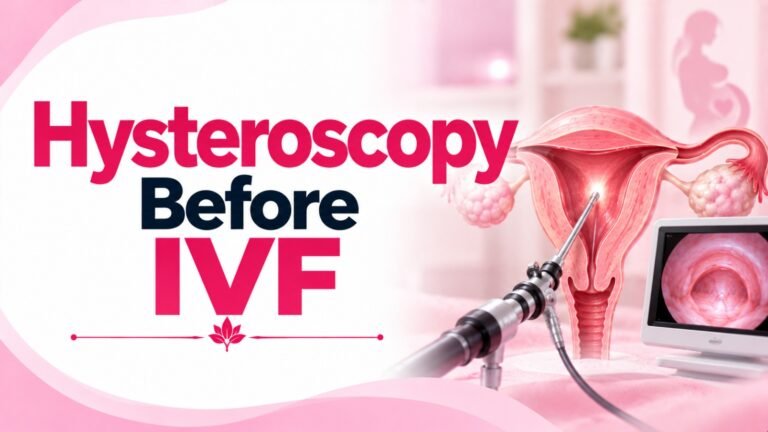
Hysteroscopy Before IVF
Preparing for in vitro fertilization (IVF) involves much more than ovarian stimulation and embryo development. Before an embryo is transferred, fertility specialists often evaluate the uterus to determine whether the uterine cavity is suitable for implantation. Depending on a patient’s medical history, symptoms, previous treatment, and imaging results, one of the procedures that may be recommended is Hysteroscopy Before IVF.
Hysteroscopy is a minimally invasive procedure that allows a doctor to examine the inside of the uterus using a thin, lighted instrument called a hysteroscope. The procedure provides a direct view of the uterine cavity and can help identify abnormalities that may not be fully characterized through routine imaging.
For selected patients, Hysteroscopy Before IVF can also be therapeutic. If a polyp, certain fibroids, scar tissue, or another cavity abnormality is identified, treatment may sometimes be performed during the same procedure.
However, hysteroscopy is not automatically necessary for every person undergoing IVF. The decision should be based on the individual clinical situation and the reason the fertility specialist believes direct visualization of the uterine cavity could be useful.
Understanding the purpose of Hysteroscopy Before IVF can help patients understand their treatment plan, discuss alternatives with their doctor, and prepare for the next stage of fertility care.
What Is Hysteroscopy?
Hysteroscopy is a gynecological procedure used to examine the inside of the uterus. A hysteroscope is a narrow instrument equipped with a light and camera. It is inserted through the vagina and cervix into the uterine cavity, allowing the physician to view the endometrium and other structures directly.
During Hysteroscopy Before IVF, the uterine cavity may be gently expanded with sterile fluid. This creates enough space for the physician to see the uterine lining and identify possible abnormalities.
There are two broad types of hysteroscopy: diagnostic and operative.
A diagnostic hysteroscopy is primarily performed to inspect the uterine cavity. It may be recommended when an ultrasound or another investigation has raised a concern.
An operative hysteroscopy is performed when treatment is needed. Depending on the specific finding, the physician may remove an endometrial polyp, treat selected submucosal fibroids, or remove intrauterine adhesions.
The exact approach to Hysteroscopy Before IVF depends on the reason for the procedure, the patient’s medical history, and the treatment plan developed by the fertility specialist.
Why Is Hysteroscopy Recommended Before IVF?
The primary purpose of Hysteroscopy Before IVF is to evaluate the uterine cavity when there is a specific clinical reason to investigate it more closely.
For an embryo to implant, it must attach to the endometrium and establish a pregnancy. Certain abnormalities within the uterine cavity can potentially interfere with this process. When such an abnormality is suspected, direct visualization may provide valuable information.
A fertility specialist may recommend Hysteroscopy Before IVF when an ultrasound suggests a possible polyp, submucosal fibroid, adhesion, or other structural abnormality.
It may also be considered in certain patients who have experienced repeated implantation difficulties or who have a medical history that increases the likelihood of an intrauterine problem.
The recommendation does not necessarily mean that a patient has a serious uterine condition. In many cases, the procedure is recommended simply because the physician wants clearer information before proceeding with embryo transfer.
Role of Hysteroscopy in Uterine Evaluation
A healthy uterine cavity is an important consideration in fertility treatment. Transvaginal ultrasound is commonly used to assess the uterus, ovaries, endometrium, and other pelvic structures.
Although ultrasound provides valuable information, it does not directly enter the uterine cavity. Hysteroscopy offers a different type of assessment because the physician can see the cavity directly.
This is one reason Hysteroscopy Before IVF may be considered when imaging results are uncertain or when a specific abnormality needs further evaluation.
The procedure can help determine whether a suspected finding is clinically relevant and whether treatment is appropriate.
Importantly, not every abnormality discovered during uterine evaluation needs to be treated. The significance of a finding depends on its type, size, location, symptoms, medical history, and relationship to fertility treatment.
Endometrial Polyps and IVF
Endometrial polyps are growths that arise from the lining of the uterus. They can vary considerably in size and may occur with or without symptoms.
Some patients with polyps experience irregular or abnormal bleeding, while others discover them during fertility testing.
When a polyp is suspected, Hysteroscopy Before IVF can allow the fertility specialist to inspect the uterine cavity directly and determine whether the growth is present.
If removal is considered appropriate, hysteroscopic polypectomy may be performed. This involves using hysteroscopic instruments to remove the polyp while visualizing the uterine cavity.
Whether removing a polyp is advisable before IVF depends on individual circumstances. Factors such as the size and location of the polyp and the patient’s reproductive history may influence the treatment decision.
Therefore, Hysteroscopy Before IVF should be viewed as part of an individualized fertility evaluation rather than as a universal requirement for patients with suspected polyps.
Fibroids and Hysteroscopy
Uterine fibroids are common benign growths of the muscular tissue of the uterus. Their potential effect on fertility varies according to their size and location.
Submucosal fibroids are particularly relevant to uterine cavity assessment because they can protrude into the cavity.
In suitable cases, Hysteroscopy Before IVF can help evaluate a submucosal fibroid and determine whether hysteroscopic removal is possible.
Not all fibroids require removal before fertility treatment. A fibroid located outside the uterine cavity may have different implications from one that significantly changes the shape of the cavity.
The decision should therefore consider the individual anatomy and reproductive goals.
When surgical treatment is recommended, hysteroscopic removal may provide a minimally invasive approach for selected cavity-distorting fibroids.
Intrauterine Adhesions
Intrauterine adhesions are areas of scar tissue that can form inside the uterus. They may develop after certain uterine procedures, pregnancy-related events, infection, or other conditions affecting the uterine lining.
Depending on their severity, adhesions can alter the shape of the uterine cavity.
Hysteroscopy Before IVF can be particularly useful for evaluating suspected adhesions because the physician can directly visualize the scar tissue.
If adhesions are present and treatment is appropriate, operative hysteroscopy may be used to release them.
The underlying cause, severity of adhesions, previous reproductive history, and condition of the uterine lining can all influence subsequent fertility planning.
Repeated Implantation Problems
Another situation in which Hysteroscopy Before IVF may be considered is a history of repeated implantation difficulties.
When embryos do not implant, fertility specialists may investigate several possible explanations. These can include embryo-related factors, chromosomal factors, ovarian factors, sperm-related factors, uterine conditions, and other reproductive or medical considerations.
Examining the uterine cavity can therefore be one component of a broader evaluation.
Hysteroscopy Before IVF does not identify every possible cause of implantation failure. It specifically provides information about the uterine cavity.
For this reason, patients should be cautious about claims that hysteroscopy alone can resolve implantation problems or guarantee a successful pregnancy.
Is Hysteroscopy Necessary for Every IVF Patient?
One of the most important points about Hysteroscopy Before IVF is that the procedure is not automatically required for everyone undergoing IVF.
A patient with a normal medical history, no relevant symptoms, and reassuring uterine imaging may not have the same indication for hysteroscopy as someone with a suspected cavity abnormality.
Fertility specialists may consider several factors before recommending the procedure.
These can include:
- Abnormal ultrasound findings
- Suspected endometrial polyps
- Suspected submucosal fibroids
- Possible intrauterine adhesions
- Abnormal uterine bleeding
- Previous uterine procedures
- Certain structural abnormalities
- Previous implantation difficulties
- Other findings from fertility investigations
The purpose of Hysteroscopy Before IVF should be clearly explained to the patient. Understanding what the physician is looking for can make it easier to determine whether the procedure fits the overall treatment plan.
Hysteroscopy vs. Ultrasound
Ultrasound and hysteroscopy are different diagnostic tools, and they may complement each other during fertility evaluation.
Transvaginal ultrasound is noninvasive and commonly used to examine the uterus and ovaries. It can provide information about the endometrial lining and can sometimes identify polyps, fibroids, or other structural findings.
Hysteroscopy, by comparison, provides direct visualization of the uterine cavity.
This distinction is important when considering Hysteroscopy Before IVF. The procedure may be recommended because an ultrasound has identified something that requires closer examination.
| Evaluation | Ultrasound | Hysteroscopy |
|---|---|---|
| Noninvasive | Yes | No |
| Examines uterus | Yes | Yes |
| Direct view of cavity | No | Yes |
| Can identify some polyps | Yes | Yes |
| Can identify certain cavity fibroids | Yes | Yes |
| Can treat selected abnormalities | No | Yes |
| Enters uterine cavity | No | Yes |
The appropriate test depends on the clinical question being asked.
What Happens During Hysteroscopy?
Patients often feel more comfortable when they know what to expect from Hysteroscopy Before IVF.
The procedure typically begins with positioning the patient for a gynecological examination. The hysteroscope is then introduced through the vagina and cervix into the uterus.
A sterile fluid may be used to gently expand the uterine cavity. This allows the doctor to see the uterine lining and identify any abnormalities.
If the procedure is diagnostic, the examination may be relatively brief.
If an abnormality is found and operative treatment is planned, additional instruments may be introduced through the hysteroscope.
The type of anesthesia varies. Some diagnostic procedures may be performed with limited pain medication or local anesthesia, while operative procedures may require sedation or another form of anesthesia.
Before Hysteroscopy Before IVF, the healthcare team should explain the planned procedure and provide instructions regarding preparation, medications, eating and drinking, and transportation if sedation or anesthesia is used.
Is Hysteroscopy Painful?
The experience of Hysteroscopy Before IVF varies between individuals.
Some patients report cramping or pressure similar to menstrual cramps, particularly during a diagnostic procedure. Others may experience more discomfort.
Operative hysteroscopy may require stronger pain management or anesthesia because surgical treatment is being performed.
Factors that can influence discomfort include the type of hysteroscope, cervical sensitivity, the complexity of the procedure, and whether tissue needs to be removed.
Patients should discuss pain-control options with their healthcare provider before Hysteroscopy Before IVF.
Knowing what type of anesthesia will be used can also help patients prepare for the procedure and recovery period.
Can Hysteroscopy Improve IVF Success?
A major reason patients ask about Hysteroscopy Before IVF is whether it can improve their chances of pregnancy.
The answer depends on the clinical circumstances.
If a patient has a significant uterine cavity abnormality, treating that abnormality may address one potential factor affecting implantation.
For example, a physician may recommend removal of a clinically relevant polyp or treatment of intrauterine adhesions.
However, simply performing hysteroscopy does not guarantee successful implantation.
IVF outcomes can be influenced by numerous factors, including maternal age, embryo quality, embryo chromosomal status, ovarian response, sperm factors, uterine conditions, and underlying reproductive or medical conditions.
Therefore, Hysteroscopy Before IVF should not be presented as a guaranteed method for increasing IVF success.
Instead, its potential value comes from identifying and, when appropriate, treating a specific uterine cavity problem.
When Is Hysteroscopy Performed?
The timing of Hysteroscopy Before IVF depends on the patient’s individual treatment plan.
Some patients may undergo the procedure during the evaluation phase before an IVF cycle. Others may have hysteroscopy after an abnormality has been identified through ultrasound or another investigation.
When surgery is performed, the fertility specialist may recommend waiting until the uterus has had sufficient time to recover before embryo transfer.
The appropriate interval depends on factors such as:
- The type of procedure
- Whether tissue was removed
- The extent of surgical treatment
- Healing of the endometrium
- Menstrual cycle timing
- The planned embryo-transfer protocol
For this reason, there is no single waiting period that applies to every patient after Hysteroscopy Before IVF.
Recovery After Hysteroscopy
Recovery from Hysteroscopy Before IVF depends largely on whether the procedure was diagnostic or operative.
After a straightforward diagnostic procedure, some patients may return to normal activities relatively quickly. Mild cramping or light vaginal bleeding may occur.
Recovery may take longer after surgical treatment, particularly if a larger polyp, fibroid, or significant adhesions were treated.
Patients should follow their doctor’s instructions concerning physical activity, sexual intercourse, medications, and follow-up appointments.
After Hysteroscopy Before IVF, patients should seek medical attention if they develop severe pelvic pain, heavy bleeding, fever, foul-smelling vaginal discharge, dizziness, or other concerning symptoms.
The treating medical team can provide individualized guidance based on the procedure performed.
Risks and Possible Complications
Like any medical procedure, Hysteroscopy Before IVF carries potential risks.
Although hysteroscopy is generally considered minimally invasive, possible complications can include infection, bleeding, cervical injury, uterine perforation, fluid-related complications, and complications related to anesthesia or sedation.
The level of risk depends on the type and complexity of the procedure.
Diagnostic hysteroscopy and operative hysteroscopy do not necessarily have identical risk profiles.
Patients should discuss the expected benefits and possible risks with their fertility specialist before proceeding.
A balanced discussion about Hysteroscopy Before IVF should also include possible alternatives and what would happen if the procedure identifies an abnormality.
How Hysteroscopy Fits Into IVF Planning
IVF involves several stages, including ovarian stimulation, egg retrieval, fertilization, embryo development, and embryo transfer.
Uterine evaluation is an important part of preparing for transfer in patients who require it.
Hysteroscopy Before IVF may therefore be performed as part of the pre-treatment evaluation rather than as a separate fertility treatment.
The findings can help the fertility team determine whether further uterine treatment is appropriate before embryo transfer.
For example, if a cavity abnormality is identified, the doctor may recommend treatment before proceeding.
If the uterine cavity appears normal, the fertility team can continue evaluating other aspects of the IVF plan.
This is why Hysteroscopy Before IVF should be interpreted in the context of the patient’s complete fertility assessment rather than considered independently.
Preparing for Hysteroscopy
Preparation for Hysteroscopy Before IVF varies depending on the facility and type of procedure.
The medical team may provide instructions about medications, fasting, transportation, menstrual-cycle timing, and other preparation requirements.
Patients should tell their healthcare provider about medications they take, allergies, previous reactions to anesthesia, and relevant medical conditions.
If sedation or anesthesia is planned, patients may need someone to accompany them home.
Following the clinic’s preparation instructions can help reduce avoidable complications and make the procedure more straightforward.
Patients should also understand what symptoms after Hysteroscopy Before IVF are considered normal and which symptoms require medical attention.
When Hysteroscopy May Not Be Needed
Although Hysteroscopy Before IVF can be valuable in selected circumstances, there are also situations where a fertility specialist may decide that it is unnecessary.
For example, if the patient’s medical history is reassuring, uterine imaging is normal, and there is no particular concern about the uterine cavity, additional invasive evaluation may not provide enough benefit to justify the procedure.
The decision should always be individualized.
A patient should not assume that hysteroscopy is necessary simply because someone else undergoing IVF had the procedure.
Likewise, patients should not assume that hysteroscopy is inappropriate simply because they have never experienced uterine symptoms.
The reason for recommending Hysteroscopy Before IVF should be based on the patient’s own clinical circumstances.
Common Misconceptions About Hysteroscopy
There are several misconceptions about Hysteroscopy Before IVF that can make fertility treatment confusing.
One misconception is that every IVF patient must undergo hysteroscopy. In reality, the need for uterine cavity assessment varies among patients.
Another misconception is that hysteroscopy guarantees pregnancy. It does not.
A third misconception is that every uterine fibroid needs to be removed before IVF. Treatment decisions depend on the fibroid’s characteristics and its relationship to the uterine cavity.
Some patients also believe that a normal ultrasound makes hysteroscopy completely unnecessary. However, the appropriate evaluation depends on the quality of imaging, symptoms, medical history, and the specific clinical concern.
The role of Hysteroscopy Before IVF is therefore best understood as individualized uterine evaluation rather than a universal step in fertility treatment.
Benefits of Direct Uterine Visualization
One of the principal advantages of Hysteroscopy Before IVF is that it provides direct visualization of the uterine cavity.
Instead of relying exclusively on indirect imaging, the physician can inspect the cavity and determine whether an abnormality is present.
Another potential advantage is that certain abnormalities can be treated during the same procedure.
For appropriate patients, this can simplify the treatment pathway by combining diagnosis and treatment.
However, these benefits need to be balanced against the fact that hysteroscopy is an invasive procedure and is not necessary for every patient.
The potential benefits of Hysteroscopy Before IVF should therefore be considered alongside the patient’s individual risks and treatment objectives.
Choosing the Right Approach
The decision to undergo Hysteroscopy Before IVF should involve a discussion between the patient and fertility specialist.
A doctor may recommend hysteroscopy because an ultrasound has identified a possible abnormality. Another patient may be advised to undergo the procedure because of a particular reproductive history.
In other situations, the physician may determine that no hysteroscopy is necessary.
There is no single approach that is appropriate for every IVF patient.
The most important consideration is understanding the clinical reason for the recommendation and how the results could influence treatment.
Patients who understand the purpose of Hysteroscopy Before IVF are better positioned to have productive conversations with their healthcare team and understand what happens next.
Final Takeaway
Hysteroscopy Before IVF can be a useful diagnostic and therapeutic procedure when a fertility specialist needs to examine the uterine cavity more closely.
It can help identify conditions such as endometrial polyps, certain submucosal fibroids, intrauterine adhesions, and other cavity abnormalities. In selected cases, these problems can be treated during the same procedure.
However, Hysteroscopy Before IVF is not automatically required for every person undergoing fertility treatment. Its usefulness depends on individual circumstances, including medical history, symptoms, ultrasound findings, previous fertility treatment, and suspected uterine abnormalities.
The procedure also does not guarantee successful implantation or pregnancy. IVF outcomes are influenced by many factors, and uterine evaluation represents only one part of comprehensive fertility care.
If your fertility specialist recommends Hysteroscopy Before IVF, ask what specific concern prompted the recommendation, what the procedure is expected to identify, whether treatment may be performed at the same time, and how the findings could affect your IVF timeline.
Ultimately, the purpose of Hysteroscopy Before IVF is to provide clearer information about the uterine cavity when that information is clinically relevant. A personalized discussion with a qualified fertility specialist can help determine whether the procedure is appropriate for your circumstances.
Medical disclaimer: This article is for general educational purposes only and should not replace personalized medical advice, diagnosis, or treatment from a qualified gynecologist or fertility specialist.
Visit Vrinda Fertility
Take the next step toward your parenthood journey with expert fertility care, advanced treatments, and personalized treatment plans.
Visit Vrinda Fertility today and consult experienced fertility specialists to understand your fertility needs and explore the right treatment options for you.