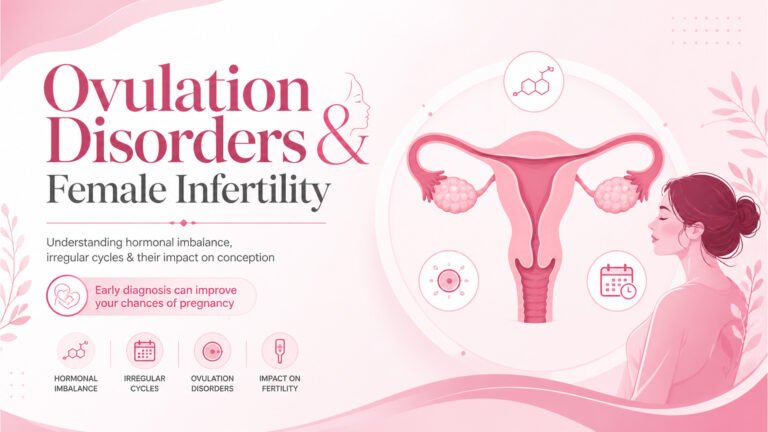
In general, female infertility is correlated with the woman’s ability to ovulate. For that reason, ovulatory disorders are known to be the leading cause of female infertility across the globe. It is pertinent for women to identify the types of disorders and associated impacts on fertility so that they can undertake measures that enhance their chances of getting pregnant.
This report will discuss the various types of ovulatory disorders and their association with female infertility, as well as address the causative factors, symptoms, diagnosis, and potential natural interventions.
Definition of Ovulatory Disorders
Ovulatory disorders are the diseases that are associated with the failure of the ovary to either partially or totally release an ovum. Ovulation is the release of an ovum from the ovary. It is one of the key components of natural fertility, and without it, infertility occurs.
Ovulatory disorders can manifest in the form of irregularity of the menstrual cycle, or hormonal imbalance, or absence of menstrual cycles (amenorrhea).
Adverse Effects of Ovulation Disorders on Female Infertility
Ovulatory disorders will hinder the natural reproductive process in women in the following ways:
- Fails to cause the release of the ovum that is mature
- Causes irregular cycles of menstruation
- Affects the production of the female hormones (Estrogen and Progesterone)
- Decrease the likelihood for fertilization
Ovulation is a key defining factor for female infertility, as without it pregnancy cannot occur.
Types of Ovulatory Disorders
1. Polycystic Ovary Syndrome (PCOS)
It is the leading cause of ovulatory dysfunction.
Distinct features:
- Irregular menstruation
- Excessive androgens (male hormones)
- Increased numbers of ovarian neoplasms (cysts)
2. Hypothalamic Dysfunction
This type is induced by stress, excessive physical activity, or low weight.
Effects:
- Disruption in hormonal communications
- Irregular or missed ovulatory cycles
3. Premature Ovarian Insufficiency (POI)
POI occurs when the ovaries wane in function prior to the age of 40.
Symptoms:
- Irregular menses
- Decreased estrogen
- Decreased fertility
4. Hyperprolactinemia
Elevated prolactin suppresses ovulation.
Symptoms of Ovulation Disorders
- Irregular/absent cycles
- Menses heavy or light
- Difficulty in conception
- Hormone related disturbances (acne, hirsutism, and weight gain)
Diagnosis of Ovulation Disorders
Several ways to investigate for the diagnostic criteria of ovulatory disorders.
- Blood tests (hormone levels)
- Ultrasound
- Ovulatory tracking
- Thyroid Function Tests
Tips to Improve Health of Ovulation Disorders (Of Natural Interventions)
There are certain things in certain circumstances, derivative of cultivation, and lifestyle cultivation in relation to ovulation.
1. Maintain Hormonal Balance
- Eat a balanced diet with requirement nutrients
- Inclusion of healthy fats and proteins
2. Manage Stress
Stress of long duration affects hormone regulation. Interventions of:
- Meditation
- Yoga
- Deep breathing
3. Maintain Healthy Weight
Disruption of ovulation occurs when the spectrum of weight is inclined either too high or too low.
4. Increase Insulin Sensitivity
Especially important for PCOS:
- Control sugar intake
- Do regular exercise
5. Use Natural Supplements (Under Supervision)
- Folic acid:
- Vitamin D:
- Omega-3:
When to Consult a Doctor
- You have irregular periods
- You have been trying to get pregnant for 12 months
- You have VERY HORMONAL SYMPTOMS.
Conclusion
Ovulation disorders are important for female infertility, but many of them are manageable. Early diagnosis, healthy lifestyle changes, and medical help can reproductive outcomes.
The sooner you take action, the more likely you are to overcome your ovulation issues and achieve a healthy pregnancy.