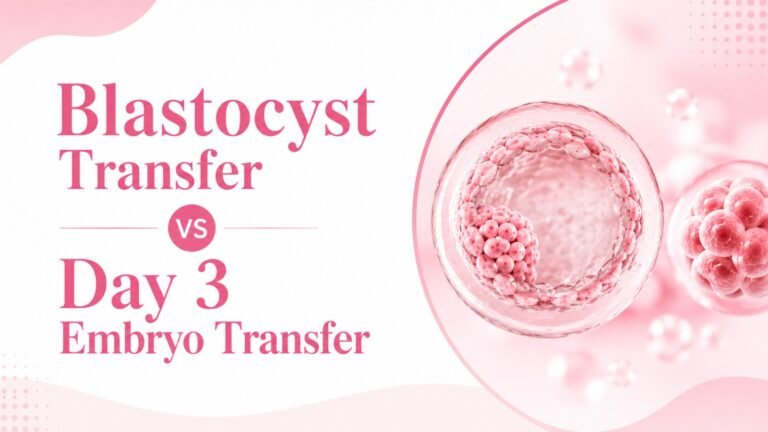
One decision that requires careful consideration in an IVF cycle is choosing the optimum time for embryo transfer. Individual patient factors lead fertility specialists to propose either a Day 3 embryo transfer, or a blastocyst transfer (Day 5 or Day 6 transfer).
For many couples, understanding the difference between Day 3 embryo transfer and blastocyst transfer is an essential part of the fertility treatment that they are undergoing. Both methods of embryo transfer have helped millions of couples to achieve a successful pregnancy, but each method has its own benefits and disadvantages.
Having a greater understanding and familiarity of the issues involved in embryo transfer will allow prospective parents to make their own informed decisions and will undoubtedly increase their chances of a successful outcome from IVF.
A Guide to the Development of an Embryo in IVF
In order to make a good comparison between the two embryo transfer methods, it is essential to know how embryos develop after the process of fertilization.
Day 1: Fertilization
The formation of the zygote occurs after the egg and sperm unite.
Day 2 – 3: Cleavage Stage
By Day 3, the embryo is typically made up of 6-10 cells after several divisions.
Day 5 – 6: Blastocyst Stage
The embryo transitions to a blastocyst, made up of:
– A fluid-filled cavity
– Trophectoderm (the future placenta)
– Inner Cell Mass (the future baby)
Naturally, this stage of embryo development is also closer to an embryo’s timing for implantation.
What is a Day 3 Embryo Transfer?
A Day 3 Embryo Transfer is when embryos are transferred to the uterus after 3 days post-fertilization before they have reached the later stages of the cleavage process.
Day 3 transfers used to be the standard procedure in IVF because laboratory culture was not as advanced as it is today. In certain cases, some fertility specialists may prefer a Day 3 transfer.
Characteristics of Day 3 Embryos
– Day 3 embryos usually contain 6–10 cells.
– Day 3 embryos are in an early stage of development.
– Day 3 embryos have spent a shorter time in laboratory culture
– They are viable for patients that have fewer embryos.
What is a Blastocyst Transfer?
A blastocyst transfer is when embryos are cultured 5 or 6 days prior to transfer.
During this time of extended culture, embryologists are able to choose the embryos that have progressed to the blastocyst stage.
Blastocyst Characteristics
– Further along in development
– Higher chances of implantation
– Better selection of embryos
– More closely aligned with natural fertilization
Distinctions Between Blastocyst Transfer and Day 3 Embryo Transfer
|Factor|Day 3 Embryo Transfer|Blastocyst Transfer|
|—————-|—————-|—————-|
|Embryo Age|3 Days|5-6 Days|
|Development Stage|Cleavage Stage|Blastocyst Stage|
|Cell Count|6–10 Cells|100–200+ Cells|
|Implantation Potential|Moderate|Higher|
|Embryo Selection|Limited|Better Selection|
|Laboratory Culture Time|Shorter|Longer|
|Multiple Pregnancy Risk|Slightly Higher|Lower with Single Transfer|
|IVF Success Rate|Good|Often Higher|
Success Rates of Blastocyst Transfer and Day 3 Embryo Transfer
A key reason for preferring blastocyst transfer in many fertility clinics is the better rates of implantation and pregnancy associated with a blastocyst transfer.
Factors for Successful Blastocyst Transfer
Day 3 transfers cannot be used for the selection of embryos, since embryos that successfully make it to the blastocyst stage can be selected and are the ones that will be implanted.
Today’s Blastocyst Stage Embryos:
– Are more likely to result in a healthy pregnancy
– Are more likely to successfully implant
– Are more likely to result in a healthy pregnancy that continues after implantation
Blastocyst Transfers are more likely to result in:
– Successful implantation in the uterus
– A confirmed clinical pregnancy
– A healthy baby being born, in patients for whom it is appropriate
Success of the transfers is impacted by multiple factors, such as:
– The age of the mother
– The quality of the eggs
– The quality of the sperm
– The condition of the uterus
– The genetics of the embryo
– The prior attempts at IVF
Benefits of Day 3 Transfer
Blastocyst Transfers are becoming more common, but Day 3 Transfers also have many benefits.
1. Less Chance to have No Transfer
Some embryos have not survived to day 5.
Patients with only a few embryos may prefer a Day 3 Transfer to avoid the embryo dying in the lab.
2. Helpful for Poor Responders
Patients with:
– Low Ovarian Reserve
– Advanced age
– Low egg yield
may benefit from a Day 3 Transfer.
3. Reduced Lab Dependence
Embryos spend less time outside the body, making the lab conditions less critical.
4. Limited Embryo Numbers
Some clinicians prefer a Day 3 Transfer when only 1 or 2 embryos are created.
Benefits of Blastocyst Transfers
Many clinics have made a preference for Blastocyst Transfers because of many clear benefits.
1. Greater Chance of Implanting
Blastocysts are more likely to implant, as they have completed many critical steps in their development.
2. Improved Embryo Selection
Extended culture allows embryologists to identify embryos with higher developmental potential.
3. Higher Live Birth Rates
Numerous studies indicate better live birth rates for better-suited IVF candidates.
4. Decreased Risk for Multiple Pregnancies
Since blastocysts implant more readily, physicians prefer to transfer a single embryo.
This addresses the risk for twins or higher-order multiple pregnancies.
5. Better Alignment with Natural Embryo Implantation
Blastocyst transfer aligns more closely with natural embryo implantation in the reproductive process.
Day 3 Embryo Transfer Potential Drawbacks
While Day 3 transfers are effective, they do have some disadvantages.
Less Precise Embryo Selection
Embryologists have fewer indicators of development at this stage.
Lower Implantation Potential
Day 3 transfers may include embryos that will not continue developing after the transfer.
Higher Requirement for Multiple Embryos
Historically, to offset lower implantation rates, more embryos were transferred.
Blastocyst Transfer Potential Drawbacks
Blastocyst transfer may not be appropriate for all patients.
Risk of No Transfer
Embryos may not develop to the blastocyst stage.
In some cases, there are no viable embryos for transfer.
Not Appropriate for All Patients
Patients with limited embryos may benefit from transferring sooner.
More Demanding of the Lab
Extended culture requires even more advanced and specialized laboratory conditions and expertise.
Who Is a Good Candidate for Day 3 Embryo Transfer?
A fertility doctor might suggest a Day 3 transfer for patients who:
– Have limited embryo production
– Have a low ovarian reserve
– Have had suboptimal blastocyst formation in previous cycles
– Are classified as poor ovarian stimulation responders
Planning treatment on a case-by-case basis continues to be important.
Who Is a Good Candidate for Blastocyst Transfer?
Blastocyst transfer is frequently suggested for patients who:
– Have high embryo production
– Have a good ovarian reserve
– Are undergoing preimplantation genetic testing (PGT)
– Have had low implantation success
– Are opting for a single embryo transfer
The Role of Genetic Testing
A common procedure for blastocysts is Preimplantation Genetic Testing (PGT) due to the large cell count making a biopsy easier.
Benefits of this include:
– Choosing better embryos
– Lowering miscarriage rates
– Higher probability of a healthy pregnancy
– Identifying embryos with normal chromosomal counts
For patients wishing for genetic testing, blastocyst transfer is favoured.
Factors That May Influence IVF Success More Relative to Transfer Day
While the day of embryo transfer is important, there are many other IVF success factors that may hold more weight.
Maternal Age
The most important factor for IVF success is maternal age.
Embryo Quality
More desirable embryos tend to have greater success in pregnancy.
Uterine Receptivity
A healthy uterus is vital for embryo implantation success.
Lifestyle Factors
Some lifestyle changes can lead to better results when trying for a baby. These include:
– A nutritious diet
– Exercising regularly
– Getting enough sleep
– Keeping stress levels low
– Not smoking
Fertility Clinic Expertise
Success rates are largely due to advanced lab technology and proficient embryologists.
What does the newer research say?
Recent IVF studies typically favour blastocyst transfer when patients have enough embryos. Commonly studied impacts show:
– Higher implantation success
– Increased clinical pregnancies
– Improved live births
– Decreased risk of multiple pregnancy when single embryo transfer is used
That being said, Day 3 transfers still have an important role in specific patients, and shouldn’t be regarded as inferior in all cases.
The ideal option is based on a patient’s unique fertility needs and doctor advice.
Conclusion
There is no single answer to the question of blastocyst transfer vs day 3 embryo transfer that applies to all IVF patients. The advantages of blastocyst transfer tend to be more effective embryo selection, higher odds of implantation, and better live birth rates. Nonetheless, Day 3 embryo transfer is a valuable option for patients with a limited number of embryos, a low ovarian reserve, and unique clinical situations.
The best approach to IVF is one which incorporates the factors of the patients reproductive history, the quality of the embryos, the patients age, and their fertility goals. A good collaboration with a qualified fertility specialist should help decide if Day 3 transfer or blastocyst transfer is the better option for the desired outcome of a healthy pregnancy and baby.